Print
  • Hold down Ctrl key and select the sections you want to print. If using a Mac, hold down the Cmd key.
  • Use Ctrl + A or on Mac, Cmd + A to select all sections (if you are using the Chrome browser).
  • Click "Apply" and the site will customise your print guide in the preview below.
  • Click the "Print" button and a print pop up should appear to print to your printer of choice.

Moving to Delhi

Modern New Delhi, located just south of the old and original city and said to be built on the foundations of seven ancient cities, is a bustling megacity filled with a blend of crowded streets, diverse languages, and striking architecture. This city hums with a variety of thriving industries and vibrant cultures, making it an eclectic and diverse community that truly defines the Indian capital.

Living in Delhi as an expat

Living in Delhi as an expat can be a whirlwind experience. The city’s cultural differences might seem overwhelming at first, but you’ll soon find yourself embracing the wonderfully multicultural melting pot that is Delhi. Unlike many other major cities, Delhi doesn't impose a single culture on you. Instead, it offers a warm welcome to everyone, whether you’re from across the world or just a different part of India.

Delhi’s economy is on the up and up. The city centre now flaunts robust industries and a skyline dotted with modern skyscrapers. Delhi's public transport system, including India’s busiest and largest metro rail network, is continuously improving, making it easier to get around this rapidly developing metropolis. Key industries like IT and telecommunications are booming, creating a high demand for skilled professionals, many of whom are recruited internationally.

When it comes to finding a place to live, you’ll have a wide range of neighbourhoods to choose from, each with its own unique character. Whether you’re after luxury Western-style accommodation or more affordable studio units, Delhi offers something for everyone.

Cost of living in Delhi

The cost of living in Delhi can be surprisingly reasonable, particularly when compared to Mumbai. Here, you can enjoy a comfortable lifestyle with access to luxuries that might be out of reach back home. New Delhi is the second most expensive city in India following Mumbai. 

In recent years, the cost of living has seen some changes. Rental prices have been on the rise, especially in expat-friendly areas. The demand for furnished apartments has surged, reflecting the preferences of many newcomers. Certain goods, particularly imported items, have become more expensive due to global economic factors, though local products remain relatively stable in price. Despite these shifts, Delhi remains an affordable choice for those seeking a dynamic yet cost-effective city to call home.

Families and children in Delhi

Delhi is becoming increasingly popular among expat families, making it a wonderful place to raise children. While public schools may still face funding challenges, most expats choose from the many excellent private or international schools in the city. Schools like the American Embassy School, British School, and Vasant Valley School are renowned for providing world-class education with facilities and curriculums that meet global standards.

Healthcare is another area where Delhi shines for expats. Private healthcare in Delhi is superb, with top-notch facilities at hospitals such as Max Healthcare, Fortis, and Apollo. Many expats also benefit from comprehensive health insurance provided by their employers, ensuring access to the best possible care. The city is also brimming with family-friendly attractions, from lush parks like Sunder Nursery and Lodhi Garden to engaging museums like the National Museum and Nehru Planetarium.

Climate in Delhi

Delhi’s climate is both humid subtropical and semi-arid. Winters are generally mild, while summers can get scorching hot, exacerbated by dry, dusty winds. The hottest months of the year are May and June.

Recently, climate change has added to Delhi's challenges, bringing increased humidity and unseasonal rains. Residents and expats alike rely on air conditioning and other cooling measures to cope with the heat. The government has also taken steps to address the environmental impact, such as implementing the odd-even vehicle rationing scheme to reduce pollution during the winter months.

Ultimately, living and working in Delhi has its pros and cons, and if you move here with an open mind, you are likely to enjoy it the most and end up staying the longest. Delhi offers the unique sights and smells of a quintessential Indian experience alongside the excitement and fast pace of a megacity.

Weather in Delhi

The climate of Delhi is a blend of humid subtropical and semi-arid characteristics, with a stark contrast between the scorching summers and the relatively mild winters. 

During the long summer months, starting in early April, temperatures in Delhi soar, often exceeding 100°F (38°C) by late May. The heat peaks in May and June, when daytime temperatures can climb to 113°F (45°C) or higher. The intense heat is made more oppressive by the hot, dry winds known as the ‘Loo’, which blow in from the west, carrying dust and raising the temperature even further.

Winter weather in Delhi arrives by November. While Delhi’s winters are generally mild, with average temperatures ranging from 43°F (6°C) to 73°F (23°C) in January. The city’s proximity to the Himalayas can lead to sudden cold spells. These cold waves can make the air feel much cooler, especially when combined with wind chill. Winter also brings heavy fog and haze, particularly in December and January, which can disrupt air, road and rail travel due to severely reduced visibility.

The rainy season in Delhi typically begins in late June or early July and continues until the end of September. During this time, the monsoon rains deliver the majority of the city’s annual rainfall, averaging about 32 inches (797mm). Temperatures during the monsoon hover around 84°F (29°C) but can fluctuate significantly, ranging from 77°F (25°C) on cooler, rainy days to 104°F (40°C) during drier spells. Humidity during the monsoon season is high, making the air feel even warmer and contributing to the city’s lush but challenging climate.


Pros and Cons of Moving to Delhi

Expats who size up the pros and cons of moving to Delhi will find plenty in the city’s favour: a low cost of living, widespread English, a fast-growing economy, and centuries of history to dig into. The main drawbacks are air pollution, safety, cultural differences, and the demands of family life, and you’ll want to think them through before you commit.

Below are the main pros and cons to bear in mind before you move to the Indian capital.


Lifestyle in Delhi

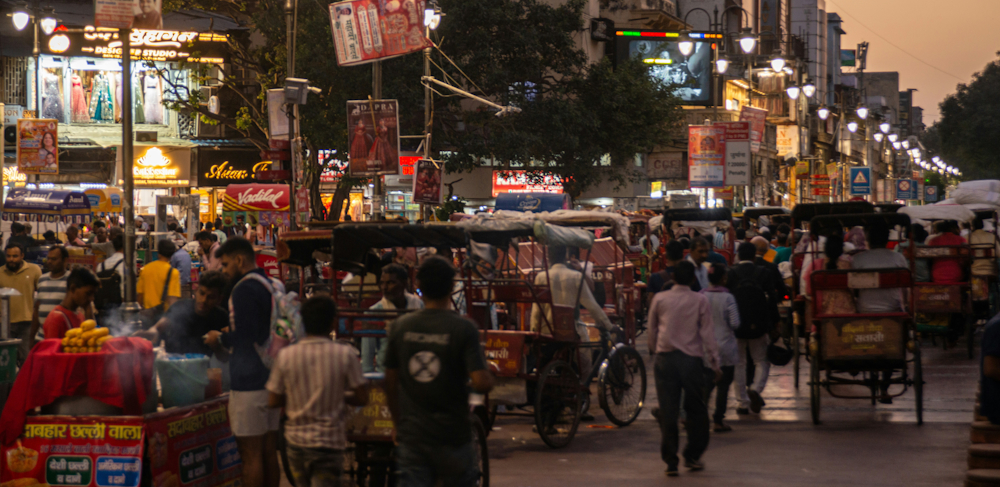
Connaught Place in Delhi

+ PRO: Centuries of history and a busy arts scene

Residents can see the same sights on their doorstep that millions of tourists cross the globe to see, and history is part of the everyday lifestyle in Delhi. Humayun’s Tomb and the Qutub Minar are both UNESCO World Heritage Sites. Traders in Old Delhi still sell spices and silver jewellery from bazaars first laid out in the Mughal era.

Fans of contemporary culture are well served too. There’s a packed programme of talks, film screenings, concerts, and exhibitions at the India Habitat Centre, and collectors fly in from around the world for the annual India Art Fair.

- CON: Food hygiene standards and ‘Delhi belly’

Delhi is famous across India for its food, from the chaat stalls of Chandni Chowk to the kebab joints around Nizamuddin. Hygiene standards are improving, but still patchy, and many newcomers have a bout of the notorious ‘Delhi belly’ in their first few months. The tap water isn’t safe to drink, so most expat homes have a reverse osmosis water purifier in the kitchen.

Busy, well-reviewed restaurants are a safer bet than empty ones, and it’s best to go for street food only when it’s fresh and piping hot and the stall has a queue of locals. It’s also sensible to build up a tolerance for spicy food gradually.

Lifestyle in Delhi


Cost of living in Delhi

+ PRO: Low cost of living

The cost of living in Delhi is low by global standards, and the city is cheaper than Mumbai. Utilities, groceries, transport, and eating out are all a fraction of the price you’d pay in a Western capital. The main exceptions are imported food, wine and spirits, prime rentals in South Delhi, and international school fees.

Domestic staff are another major perk. Many expats employ a cook, a cleaner, a driver, or a nanny, and you’ll have more time for your career and your family as a result.

Cost of Living in Delhi
Domestic Help in Delhi


Health and safety in Delhi

- CON: Pollution is hazardous

Air quality is the biggest health and safety concern in Delhi, and it's considered one of the most polluted cities in the world. Smog is at its worst between late October and January, when crop stubble in Punjab and Haryana is burned and residents set off fireworks for Diwali. Vehicle and industrial fumes are also trapped close to the ground in the cold, still winter air. The air is cleanest during the monsoon, but pollution is above safe levels for most of the year.

Children, pregnant women, older residents, and people with asthma or heart conditions are the most vulnerable. The authorities restrict construction work and the operation of older vehicles under the Graded Response Action Plan (GRAP) when air quality is poor, and schools will sometimes move classes online during the worst spells.

Most expats run air purifiers at home, check the daily air quality index (AQI), wear N95 masks outdoors on bad days, and keep children inside when readings are high. Some families also take a winter break abroad at the height of the pollution season.

+ PRO: Excellent private healthcare

If you do fall ill, you can rest assured that Delhi’s private hospitals are among the best in India. There are large hospital chains such as Apollo, Fortis, Max, and Medanta across Delhi and the wider National Capital Region (NCR), and several of their facilities are accredited by Joint Commission International (JCI). Doctors in private hospitals speak English, and the city is a big hub for medical tourism.

Public hospitals such as the All India Institute of Medical Sciences (AIIMS) have highly respected specialists, but waiting times are long, and wards are crowded. Expats should take out private health insurance before they arrive.

- CON: Crime and harassment, especially for women

Safety is a real concern in Delhi, and the risks are highest for women. India’s National Crime Records Bureau (NCRB) regularly records more crimes against women in Delhi than in any other major Indian city. Petty theft is also common, and phone snatching is a particular problem in crowded markets and on public transport.

Violent crime against expats is relatively rare, but female expats often deal with unwanted attention in crowded places. This can be anything from persistent staring to groping.

Most expats live in gated communities or in neighbourhoods with private security guards. App-based taxis with live trip sharing are a safer choice at night than cabs hailed on the street. The Delhi Metro Rail Corporation (DMRC) reserves the first coach of its trains for women. It’s best not to walk alone late at night in poorly lit areas.

Healthcare in Delhi
Safety in India


Accommodation in Delhi

+ PRO: Spacious, well-equipped homes

Most expats settle on one of two kinds of accommodation in Delhi. Leafy South Delhi neighbourhoods such as Vasant Vihar, Shanti Niketan, Greater Kailash, and Defence Colony are full of spacious ‘builder floors’. These are low-rise blocks with one large apartment on each floor, and the top and ground floors often have private terraces or gardens.

In Gurugram (formerly Gurgaon), gated high-rise communities along Golf Course Road have pools, gyms, round-the-clock security, and backup generators. They’re especially popular with expats who work in Gurugram’s corporate offices.

- CON: Patchy power and water supplies

Power cuts and water shortages are part of life in Delhi in summer, when temperatures often exceed 113°F (45°C) and electricity demand is at its peak. Residents in many neighbourhoods have to buy water from private tankers when the municipal supply is low. Leaks and damp are common in older buildings during the monsoon, and some landlords are slow to fix them.

Before you sign a lease, check that the property has a power backup (a generator or an inverter), a water storage tank, an RO water purifier, and air conditioning in every bedroom.

Accommodation in Delhi
Areas and Suburbs in Delhi


Local culture in Delhi

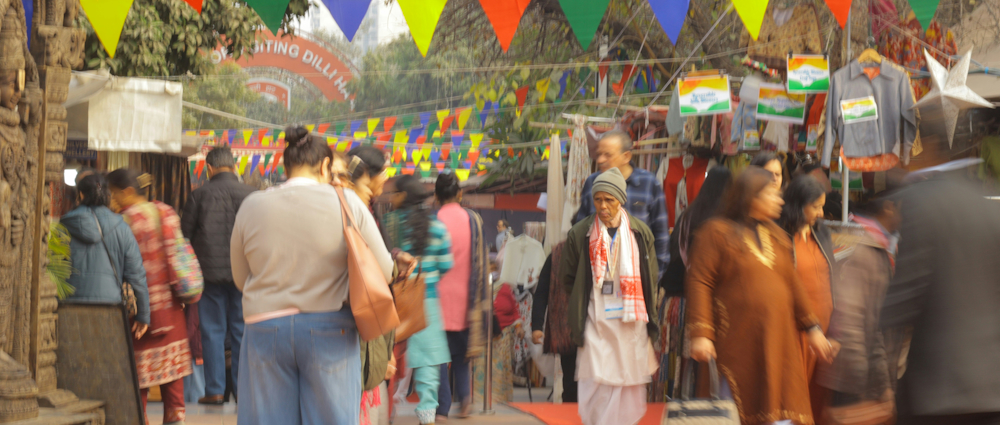
Chandni Chowk in Delhi by Zoshua Colah on Unsplash

+ PRO: English is widely spoken

English speakers usually find local culture in Delhi easier to slot into than they expect. Hindi is the language of the street, but English is the working language of business, government, higher education, and private healthcare. Most expats in South Delhi and Gurugram get by in English at work and around town.

Lots of Delhiites switch between the two languages mid-sentence, and locals call the result Hinglish. Expats who learn a few words of Hindi will find it easier to deal with auto-rickshaw drivers, market traders, security guards, and domestic staff.

- CON: Patriarchal society

Delhi is still a patriarchal society, although the younger Delhiites tend to hold more progressive views. Women are underrepresented in the workforce and in senior roles, and sexism is common at work and in everyday life. Expat women sometimes find that shopkeepers, tradespeople, landlords, and even colleagues address their male partner rather than them. Modest dress is sensible in conservative areas such as Old Delhi and at religious sites.

- CON: Local attitudes to personal space

Delhiites are famously warm and hospitable, but their approach to personal space and privacy can be different from what expats used to. Strangers often ask about your job, your salary, your marital status, and why you don’t have children yet. These questions are usually friendly curiosity rather than rudeness.

Foreigners are frequently asked to pose for selfies at monuments, and queues at ticket counters and metro doors can be more of a scrum than an orderly line. A polite but firm ‘no’ is perfectly acceptable.

Local Culture in India


Getting around in Delhi

Getting around in Delhi

+ PRO: Public transport is improving rapidly

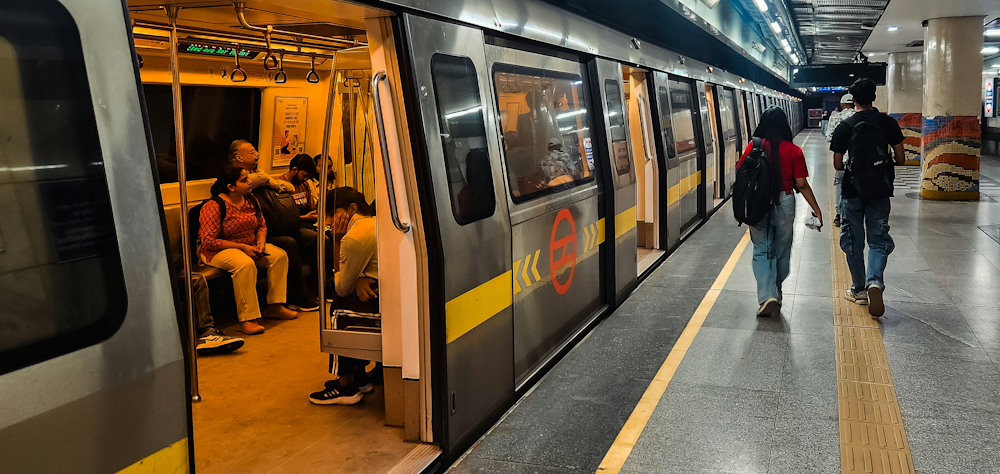
Getting around in Delhi is far easier than it used to be, mainly because of the metro. The Delhi Metro is now one of the longest metro networks in the world, and it has lines out to Gurugram, Noida, Ghaziabad, and Faridabad. Trains are clean, air-conditioned, frequent, and inexpensive. The Airport Express Line is the quickest way between the airport and central Delhi, and DMRC has more lines and extensions under construction.

Buses are even cheaper but tend to be crowded. Auto-rickshaws and electric rickshaws are handy for short hops and for the last stretch home from a metro station. Ride-hailing apps such as Uber, Ola, Rapido, and inDrive make it easy to book a car or an auto-rickshaw.

- CON: Traffic is a nightmare, and driving can be dangerous

Delhi’s traffic is notoriously chaotic, and motorists can spend an hour or more on a short trip across town at rush hour. Delhiite driving habits are aggressive, and the honking on the roads makes for a constant din. Drivers also have to contend with cyclists, pedestrians, cows, and vehicles on the wrong side of the road. Waterlogged underpasses are a regular monsoon hazard, and visibility can be dangerously low in winter fog.

Many expats use the metro or hire a driver rather than get behind the wheel themselves.

+ PRO: Easy travel across India and beyond

Delhi is one of the best-connected cities in Asia. Indira Gandhi International Airport is India’s busiest airport, and airlines fly direct from there to cities across Europe, North America, the Middle East, and East Asia. Noida International Airport in Jewar is a second option for residents of Noida and Greater Noida.

Agra and the Taj Mahal are about two hours away by fast train, so weekend escapes are easy. Jaipur and the Himalayan foothills around Rishikesh are close enough for a long weekend.

Getting Around in Delhi


Kids and family in Delhi

- CON: Delhi isn’t the most family-friendly city

Delhiites dote on children, but daily life with kids and family in Delhi can be hard work. Families tend to stay indoors on the worst smog days in winter, and the summer heat is just as limiting in May and June. Pavements are patchy or missing altogether in many neighbourhoods, so it’s tricky to get around on foot with a pushchair. Most families rely on a driver for school runs and outings due to traffic and safety concerns.

Parks such as Lodhi Garden and Sunder Nursery are pleasant for picnics, and malls have indoor play centres for days when the air is bad.

+ PRO: An excellent choice of international schools

Delhi has some of India’s most respected international schools, and the best known are in the diplomatic enclave of Chanakyapuri. The American Embassy School and The British School are popular with diplomatic and corporate families. There are also French and German schools linked to their countries’ embassies.

Gurugram has a growing number of international schools that teach the International Baccalaureate (IB) or Cambridge curricula. Many of Delhi’s top Indian private schools offer the same programmes alongside the national Central Board of Secondary Education (CBSE) syllabus.

- CON: High fees and long waiting lists

International school fees in Delhi are steep, and they’re far higher than they were a decade ago. On top of tuition, families should budget for one-off admission and development fees, plus transport, meals, uniforms, and exam entries.

Places are limited, and the embassy-linked schools give priority to diplomats’ children. Waiting lists can be long, so families should apply as early as they can – a year before the move is ideal. Expats who relocate with an employer should check whether school fees are included in their package before signing a contract.

Private Schools in Delhi
International Schools in Delhi


Working and doing business in Delhi

- CON: Poor work-life balance

Long hours are the norm for professionals working and doing business in Delhi. India’s legal limit for a standard working week is 48 hours, but many employees are expected to put in more. Six-day weeks are still common at some Indian companies. Office culture is hierarchical, so junior staff are often reluctant to leave before their manager.

Expats at multinationals will regularly have to take late-evening calls with colleagues in Europe or the USA, and many also have to deal with a commute of an hour or more each way. The pace can be exhilarating, but newcomers should be ready for a tougher work-life balance than they’re used to.

+ PRO: A fast-growing economy and strong career prospects

Delhi NCR and Mumbai are India’s two biggest business hubs, and India is one of the fastest-growing major economies in the world. IT, telecommunications, finance, consulting, and e-commerce are the strongest sectors for skilled expats. Gurugram is home to the Indian headquarters of hundreds of multinationals, and Noida is a big centre for IT and electronics manufacturing. New Delhi is the base for government ministries, embassies, international organisations, and NGOs, so there’s steady demand for consultants, lawyers, journalists, and policy specialists.

The Confederation of Indian Industry (CII) and the Federation of Indian Chambers of Commerce and Industry (FICCI) both have their headquarters in New Delhi, and several foreign chambers of commerce run regular networking events in the city. If you’re a skilled professional, the opportunities here can be immense, and Delhi is an excellent place to build a career.

Working in Delhi
Doing Business in India

Working in Delhi

Expats working in Delhi have one of India’s largest job markets on their doorstep. The capital is the centre of the wider National Capital Region (NCR), and most of the region’s corporate offices are in Delhi itself or in the satellite cities of Gurugram and Noida.

Major employers include the central government, international organisations, telecoms and IT companies, consulting and marketing firms, and national media groups. Competition for jobs is stiff, though. Most positions can be filled by local talent, and employment visas are only available for skilled professionals, so expats are usually hired for specialist expertise, senior leadership, international experience, or language skills.


Job market in Delhi

Most jobseekers see the job market in Delhi and its satellite cities as one and the same. Gurugram, which many residents still call Gurgaon, is in Haryana, and Noida is in Uttar Pradesh. Lots of professionals will live in one state and work in another, and both cities are on the Delhi Metro network. Rush-hour traffic on the expressways is heavy, so a lot of commuters choose a home close to the office.

Delhi itself has India’s deepest talent pools in public policy, law, media, and development work. Chanakyapuri, New Delhi’s diplomatic enclave, is home to dozens of embassies and high commissions, and the city has a large international community. UN agencies in India are mostly based in New Delhi, and the World Health Organization runs its South-East Asia regional office from the capital. Think tanks, NGOs, foundations, and development consultancies are concentrated here too, so Delhi is India’s main centre for careers in policy analysis, project management, international relations, and advocacy.

IT and telecoms are still among the largest employers, and the big companies in both sectors run regular campus recruitment drives. Global capability centres (GCCs) are a major draw. These are the in-house technology, finance, analytics, and HR hubs that multinationals set up in India, and the NCR has hundreds of them. Most are in Gurugram and Noida.

Healthcare is another major source of jobs. The NCR’s large private hospital groups hire for medical and administrative roles alike, and many treat a steady flow of international patients.

E-commerce is big business in the NCR, and several of India’s best-known online retail and delivery companies have their headquarters in Gurugram. They hire for logistics, customer service, digital marketing, and data roles.

Factory jobs are mostly outside the city limits. Samsung and other electronics manufacturers build a large share of India’s mobile phones in Noida and Greater Noida, and Maruti Suzuki and other carmakers run large plants in Haryana. Logistics and aviation jobs are also on the rise around the new Noida International Airport at Jewar.


Finding a job in Delhi

Finding a job in Delhi, laptop and coffee cup

Finding a job in Delhi is easiest with an intra-company transfer, which is how most expats arrive. Without one, networking is the surest way in, and employers tend to look more closely at candidates who come recommended by someone they know.

Business events are a good place to make contacts. The four big national business chambers (CII, FICCI, ASSOCHAM, and PHDCCI) all have their headquarters in New Delhi and run frequent conferences and member events. AmCham India is also based in the capital, and several bilateral chambers have chapters in Delhi.

The most popular job portals are Naukri, Foundit (formerly Monster India), Indeed, and LinkedIn, all of which are in English. Recruiters rely heavily on LinkedIn for senior and specialist roles. Companies often post vacancies on their own careers pages, and UN agencies and other international organisations recruit through their own portals.

Recruitment agencies and relocation companies can help with the job hunt, but you should check that an agency is reputable before you sign up. Fake job offers and bogus recruiters who demand fees are a well-known problem in India. Ask colleagues for recommendations, and never pay an upfront fee to be considered for a role. Under India’s labour codes, employers have to give new employees a written appointment letter, so be wary of any company that can’t provide one.

Foreign nationals generally need an employment visa before they start work, and the employer supplies much of the paperwork for the application. Overseas Citizens of India (OCI) cardholders are an exception.

Visas for India

Useful links


Work culture in Delhi

coworkers collaborating

Hierarchy and personal relationships are central to work culture in Delhi, so you’ll settle in faster if you learn the basics of Indian workplace etiquette before you arrive. Many Indian organisations still have a traditional top-down structure, although multinationals and start-ups tend to run flatter, more collaborative teams.

If you’re hired for a senior management role, your team may expect clear, direct instructions rather than room to take the initiative. Junior colleagues often wait for a decision from above and may hesitate to challenge a manager in a meeting. Indian employees commonly address their managers as sir or ma’am. Communication is polite and often indirect, and some staff would rather not give a senior colleague a flat ‘no’. You’ll avoid most misunderstandings if you ask open questions and confirm deadlines in writing.

Long hours are common, and teams that work with Europe or the US are often expected to join calls late into the evening. Multinationals mostly work Monday to Friday, but some Indian companies still expect staff in on Saturdays. India’s financial year is April to March, and companies frequently hold appraisals and pay reviews around April.

Office life in Delhi has a seasonal rhythm. Under the city government’s winter pollution plan, most employers in Delhi must allow half their staff to work from home between November and January. The governments of Haryana and Uttar Pradesh can allow similar arrangements in Gurugram and Noida during severe smog. Many staff take leave around Diwali in October or November, when Indian employers often give gifts or a festive bonus.

Business Culture in India

Cost of living in Delhi

Expats who move to India’s capital tend to find the cost of living in Delhi far lower than in comparable cities in North America or Europe. Mumbai is pricier, and the gap is widest for rent. Local food and public transport are cheap by Western standards, and many expat households employ a cook, a cleaner, a nanny, or a driver for a fraction of what they’d pay at home.

The big expenses are international school fees, private healthcare, imported groceries, and rent in the most sought-after neighbourhoods. Try to negotiate allowances for these costs with your employer before you sign a contract.


Cost of accommodation in Delhi

Rent is likely to be one of your largest outgoings, but the cost of accommodation in Delhi is reasonable by the standards of big cities in Europe or North America. Even the upscale areas are affordable by comparison. Newcomers from smaller Indian cities may find rents in central and sought-after neighbourhoods steep.

Rents are highest in central and south Delhi’s leafy colonies, and Golf Links, Jor Bagh, Shanti Niketan, and Vasant Vihar are all at the top end. Landlords ask less the further you go from the centre, and Noida, which is across the Yamuna in Uttar Pradesh, is cheaper still. Gurugram is a satellite city in neighbouring Haryana. Many multinationals have offices there, and rents in its newer high-rise complexes are among the highest in the capital region.

Your landlord will likely ask for a security deposit of two to three months’ rent, and the broker’s commission will be somewhere from a half to a full month’s rent. Most leases are for 11 months, and landlords commonly raise the rent whenever you renew.

You’ll also need to budget for electricity, water, internet, and building maintenance charges. Electricity bills are generally lower than in Western cities, but there’s a spike when summer temperatures regularly exceed 104°F (40°C) and air conditioners are on day and night.

Most expat households also buy air purifiers for the smoggy winter months. A reverse-osmosis water filter is standard too, since Delhi’s tap water isn’t safe to drink.

Renting Accommodation in Delhi
Best and Worst Areas and Suburbs in Delhi


Cost of transport in Delhi

Commuters who stick to the metro can keep the cost of transport in Delhi pleasantly low. The Delhi Metro is cheap and efficient, and the network has more than 285 stations across Delhi and its satellite cities. There’s also an express line to the airport. Regular riders should buy a smart card, as cardholders get a discount on every trip and a bigger one outside peak hours.

Fares on the city’s buses are even lower, and most of the fleet is now air-conditioned and electric. The buses are often packed and uncomfortable at peak hours, though, and newcomers may find the routes hard to work out.

Auto rickshaws and e-rickshaws are the usual choice for short hops and the last stretch from a metro station. Many drivers won’t use the meter, so you’ll need to agree on a fare before you set off. You’ll see the price upfront and skip the haggle if you book an auto or e-rickshaw through a taxi app such as Uber or Rapido. In the narrow lanes of Old Delhi, a cycle rickshaw is still the most practical ride, and the fare is up for negotiation.

Plenty of expat families hire a full-time driver rather than take on Delhi’s chaotic traffic themselves, and a driver’s salary is a fraction of what it would be in the West.

Getting Around in Delhi


Cost of groceries in Delhi

The cost of groceries in Delhi is low for those who shop like locals. Fruit, vegetables, lentils, and staples such as rice and wheat flour are cheap, and fresh produce prices are usually lower at neighbourhood markets than at supermarkets. Many Delhi residents order groceries through quick-delivery apps such as Blinkit and Zepto, and riders often arrive within minutes.

Imported foodstuffs are considerably pricier. The specialist grocers in INA Market and Khan Market have stocked imported goods for diplomats and expats for decades, and several upmarket malls have gourmet supermarkets.


Cost of entertainment and eating out in Delhi

Whether you’re after street food or white-tablecloth dinners, the cost of entertainment and eating out in Delhi is kind to your wallet. You can eat well at a street stall in Chandni Chowk for pocket change, and the bill for a three-course meal at a mid-range restaurant is a fraction of what it would be in London or New York. The city’s top restaurants are pricey by local standards, but many expats still consider them a bargain.

Hauz Khas Village, Khan Market, Connaught Place, and Gurugram’s Cyber Hub are the best-known areas for restaurants and bars. Alcohol is the main exception to the low prices. Taxes on alcohol in India are steep, and bars often charge as much for a couple of beers as for a casual meal.

Lifestyle in Delhi


Cost of education in Delhi

School fees are the biggest part of the cost of education in Delhi for expat parents, most of whom choose private or international schools. Few opt for public schools, where the standard may be lower than they’re used to. Fees at the top international schools are on a par with those at private schools in the US or UK, and the American Embassy School in Chanakyapuri sets its fees in US dollars. Indian private schools that teach in English are far cheaper, and some offer international curricula such as the International Baccalaureate (IB) or Cambridge IGCSE.

Tuition is only part of the bill. Most schools charge one-off admission and development fees, and parents also pay for uniforms, textbooks, the school bus, and extracurricular activities. Schools usually raise their fees every year, so factor that into any allowance you negotiate. Demand for places at the most popular schools is high, and you should apply well before you arrive.

Education and Schools in Delhi
Best International Schools in Delhi


Cost of healthcare in Delhi

Expats rarely rely on the public system, so the cost of healthcare in Delhi is mostly about private fees and insurance premiums. Public hospitals such as the All India Institute of Medical Sciences (AIIMS) are cheap and have some of the country’s best specialists, but the queues are long, and the wards are crowded. Apollo, Fortis, Max, and Medanta all run private hospitals across the capital region. Standards at these hospitals are high, and fees are far lower than in the US or UK.

Bills for surgery or a long hospital stay can still be hefty, so you should have health insurance. Many employers include cover in expat packages. Ask for either an international health insurance policy or a healthcare allowance when you negotiate your contract. If you buy an individual policy from an Indian insurer, you won’t pay goods and services tax (GST) on the premiums.

Healthcare in Delhi


Cost of living in Delhi chart

Prices are listed in Indian rupees (INR) and may vary depending on the product and service provider. The list below shows average prices for Delhi in November 2026.

Accommodation (monthly rent)
Three-bedroom apartment in the city centreINR 71,000
Three-bedroom apartment outside the city centreINR 38,000
One-bedroom apartment in the city centreINR 26,000
One-bedroom apartment outside the city centreINR 15,000
Shopping
Eggs (dozen)INR 105
Milk (1 litre)INR 70
Rice (1kg)INR 75
Loaf of white breadINR 45
Chicken breasts (1kg)INR 330
Cheese (500g)INR 210
Eating out
Three-course meal for two at a mid-range restaurantINR 2,000
McDonald’s combo mealINR 360
Coca-Cola (330ml)INR 35
CappuccinoINR 225
Draft beer (domestic)INR 200
Utilities/household
Mobile phone monthly plan with calls and dataINR 390
Internet (uncapped broadband, average per month)INR 650
Basic utilities (average per month for a standard household)INR 4,000
Transport
Taxi rate (per kilometre)INR 25
Bus/train fare in the city centreINR 40
Gasoline/petrol (per litre)INR 102

Accommodation in Delhi

Expats who want good accommodation in Delhi at a fair price have their work cut out for them. Demand for homes has outpaced supply for years, and rents across the capital are far higher than they were a few years ago.

Gurugram, Noida, Greater Noida, and Ghaziabad are all satellite cities in the wider National Capital Region (NCR), and many newcomers search across the whole region. Gurugram is the NCR’s most expensive rental market because so many multinationals and tech firms have offices there. Golf Course Road and the Dwarka Expressway are two of its most sought-after addresses. Noida and Greater Noida are among the most affordable big-city rental markets in India, so you could save a fair amount on rent if you choose your location wisely.

Some employers lend a hand with the house hunt. If you’re going it alone, a reliable real estate agent can make the process much smoother.


Areas and suburbs in Delhi

Areas and suburbs in Delhi

Newcomers usually narrow down the areas and suburbs in Delhi by commute and budget first, and then by the kind of neighbourhood they’d like to come home to. Hauz Khas Village has a buzzy bar scene and a young crowd, while leafy Jor Bagh is quiet and popular with families.

Plenty of expats skip Delhi proper and settle in Gurugram or Noida instead. Both cities are on the Delhi Metro network. Gurugram has more international restaurants and nightlife, while Noida is generally quieter.

If you want to find out more, check out our comprehensive guide to the Best (and Worst) Areas and Suburbs in Delhi.


Types of accommodation in Delhi

Most expats rent either a builder floor or an apartment in a gated society, and these are the main types of accommodation in Delhi. High-rise towers are less common in Delhi itself, and most of the region’s tallest residential blocks are in Gurugram and Noida. Lutyens’ Delhi is famous for its colonial-era bungalows, but most are government residences, and embassies and big companies are the usual tenants for the few private ones on the market.

Apartments in gated societies are the standard choice in Gurugram and Noida. A society is a cluster of high-rise towers, and residents share a gym, pool, clubhouse, and round-the-clock security. Most societies also have power backup for outages. Flats in these complexes are pricier than builder floors. Some residents find life in a big tower a little isolating, although most complexes have busy residents’ groups and community events.

Independent floors are among the most popular types of property in Delhi, and most locals call them builder floors. They’re in low-rise buildings of three or four storeys, and you rent a whole floor rather than a unit in a block. Builder floors have more space and privacy than high-rise apartments, but gyms and pools are rare unless the building is part of a gated complex.

Landlords often live on another floor of the same building. That’s handy when something breaks, although some tenants find it a little close for comfort. Top-floor flats are fiercely hot in summer, and so are the rooftop units known as barsatis. Ask about air conditioners and roof insulation before you sign for one.

If you’d like more space and seclusion, a villa or independent house might be your best bet. Houses are harder to find and usually pricier than flats, but most have more privacy, and many have a garden. They’re ideal for families and anyone who wants a quieter home. Upmarket colonies such as Vasant Vihar and Shanti Niketan are the usual places to look in Delhi, and Gurugram’s older DLF phases have plenty of independent houses.

Landlords and agents in India describe homes by BHK, which is short for bedroom, hall, and kitchen. A single professional might settle on a one BHK, while families usually look at two or three BHK flats and up. The smallest studios are one RK flats, and RK is short for room and kitchen.

Furnished vs unfurnished

Landlords in Delhi let homes furnished or unfurnished, and many also advertise flats as semi-furnished. A semi-furnished flat usually has wardrobes, fans, lights, and a fitted kitchen, and some landlords add air conditioners and water heaters (known locally as geysers). Some unfurnished flats don’t even have light fittings, so check exactly what’s included before you sign.

Fully furnished homes are highly sought after among expats and young professionals who’d rather not buy furniture, and landlords charge more for them. Tenants who plan to stay several years often prefer unfurnished homes because the rent is lower and they can make the place their own. Plenty of NCR residents rent furniture and appliances by the month as a middle ground.

Short lets

You’ll find plenty of short lets in Delhi, especially around Connaught Place and in South Delhi neighbourhoods such as Greater Kailash and Saket. Business travellers also favour serviced apartments in Gurugram and in Aerocity, which is next to the airport.

Airbnb and Booking.com both have a wide choice of listings in the city. A short let is pricier than a long-term rental, but it’s a sensible base for your first few weeks while you house hunt. Fire safety standards are patchy in some guesthouses and converted homes, so check for a clear exit route and smoke alarms before you book.

Useful links


Finding accommodation in Delhi

Finding accommodation in Delhi

If you’re moving for work, your employer may well help with finding accommodation in Delhi, and some companies line up a home before you land. You’ll have less choice that way, but you’ll save a lot of hassle. Employer-arranged homes are usually comfortable and close to the office.

Some expats are lucky enough to have a relocation company on the case. Its consultants ask what you want and shortlist properties for you to view.

If you’re on your own, start online before you arrive. MagicBricks and 99acres have thousands of NCR listings, and on both you can filter for owner-listed homes to deal directly with landlords and avoid a broker’s fee. Expat groups on Facebook are another good source, and so are the residents’ groups in gated societies, since owners often advertise there first.

Once you’re in Delhi, a reputable real estate agent is the quickest way to see lots of homes in a short time. Locals usually call agents brokers or property dealers. Good brokers know the local market inside out and can steer you away from problem buildings. The usual fee is one month’s rent, and it’s negotiable. Brokers often charge both the tenant and the landlord, so agree on your share in writing before you start viewings.

Working in Delhi

Useful links


Renting accommodation in Delhi

If you’re renting accommodation in Delhi, expect landlords to charge a hefty premium for newer buildings. Rent for a flat in a new development can be up to double the rent in an older block nearby.

Delhi’s old rent control law applies only to the cheapest tenancies, so landlords set most rents based on demand and the condition of the property. A knowledgeable agent can tell you whether the asking rent is in line with similar homes in the area, and most landlords expect tenants to haggle a little.

Making an application

You won’t need much when you’re making an application in Delhi. Landlords and agents usually ask for these documents.

  • Passport and visa copies
  • Proof of your permanent address, which can be from your home country
  • An employment letter or recent salary slips as proof of income
  • Two passport-sized photographs for the rent agreement and police verification

Before you hand over any money, ask to see the landlord’s sale deed or a recent property tax receipt as proof of ownership.

Delhi Police requires landlords to register every tenant for police verification, and foreign tenants have an extra step. Within 24 hours of your arrival at the property, your landlord must report your stay to the Foreigners Regional Registration Office (FRRO) through an online Form C. You may need a copy of this form when you register with the FRRO yourself, so check that your landlord has filed it.

Leases

Landlords in Delhi usually offer 11-month leases. Any agreement of a year or more has to be registered at the Sub-Registrar’s office, and many landlords would rather avoid the extra stamp duty and fees. An 11-month agreement should still be printed on e-stamp paper and notarised; both parties can renew it each year. Most landlords add a rent increase of 5 to 10 percent at each renewal.

Lock-in periods are common too. During a lock-in, neither party can terminate the lease without incurring a penalty. If your employer could transfer you at short notice, negotiate a short lock-in or none at all.

Deposits and fees

Bengaluru landlords can ask for up to 10 months’ rent as a deposit, but deposits and fees in Delhi are far more modest. Most landlords here ask for between one and three months’ rent.

Under the central government’s Model Tenancy Act, deposits on homes are capped at two months’ rent, but the cap is only in force where a state or territory has adopted the act. Delhi hadn’t adopted it at the time of writing, so ask your agent whether the rules have changed before you sign. Gurugram is in Haryana, and Noida is in Uttar Pradesh, so tenancy rules in those cities aren’t the same as Delhi’s.

Tenants usually pay the first month’s rent upfront, and the two sides often split the stamp paper and notary costs. When you move out, the landlord returns the deposit minus any unpaid bills or the cost of repairs. Photograph every room on the day you move in so there’s a record if you disagree later.

Terminating the lease

Landlords and tenants agree on the notice period for terminating the lease when they sign, and one month is the most common term in Delhi. Some landlords ask for two or three months’ notice, so read this clause carefully. Tenants who leave without proper notice or during a lock-in usually lose part or all of the deposit.

A landlord who ends the lease early without notice may owe you compensation if the agreement has a clause to that effect. Some owners end a lease early because they’ve sold the property or need it for family, so ask your landlord to add a clause about these situations.

Renting Accommodation in India

Useful links


Utilities in Delhi

Utilities in Delhi

Tenants usually pay for utilities in Delhi on top of the rent. In many rentals, the electricity and water accounts are in the landlord’s name, so you either pay the bills directly or settle up with the landlord each month. Most gated societies also charge a monthly maintenance fee, and some landlords include it in the rent.

Electricity

Private companies have supplied most of the electricity in Delhi since the Delhi Vidyut Board was broken up in 2002, and the supply is far more reliable as a result. BSES Rajdhani Power supplies south and west Delhi, and its sister company BSES Yamuna Power handles east and central Delhi. Tata Power-DDL supplies the north and northwest, and the New Delhi Municipal Council (NDMC) looks after its own central district.

Power cuts are rare in most of Delhi, even in summer, when demand is at its peak. Gurugram is a different story. Several-hour outages are common there during the hot months, so most gated societies have diesel or battery backup. Ask whether the backup is enough for the air conditioners or only for lights and fans, and find out how the society bills for it.

Household tariffs in Delhi are low by Indian standards, but there’s also a variable surcharge on every bill called the Power Purchase Adjustment Cost (PPAC). Bills are issued monthly, and you can pay via your supplier’s app or set up autopay with your bank.

Tenants in builder floors should check whether the flat has its own meter from the supplier or a sub-meter on the landlord’s connection. On a sub-meter, the landlord sets the per-unit rate, and many charge well above the official tariff, so get the rate in writing.

Mains electricity in India is 230V and 50Hz. Most laptop and phone chargers are dual-voltage, but you’ll need a voltage converter and a plug adapter for many US kitchen appliances.

Gas

Most households in Delhi cook with gas, and many now have piped natural gas (PNG) from Indraprastha Gas Limited (IGL), which supplies Delhi, Gurugram, Noida, and Ghaziabad. Piped gas is generally reliable, and outside of planned maintenance, interruptions are rare. Households without a pipeline buy LPG cylinders from Indane, Bharat Gas, HP Gas, or one of the smaller private suppliers.

You’ll get an IGL bill every second month, which you can pay online or through India’s UPI payment apps. LPG users can book refills through the supplier’s app or by phone, and the local distributor delivers them to the door. If the flat isn’t connected to the pipeline yet, IGL will need the rental agreement and an NOC from your landlord before it can install a connection.

Water

Water in Delhi is supplied by the Delhi Jal Board (DJB), and the NDMC and Delhi Cantonment Board run supply in their own areas. In many neighbourhoods, the mains supply is only on for a few hours a day. Most buildings have a motor and an overhead tank, so residents have water around the clock even when the mains are off. Some households order water tankers during summer shortages. When you view a builder floor, check the water pressure and ask whether your flat has its own motor and tank.

Expats shouldn’t drink water straight from the tap. Most furnished and semi-furnished flats have a reverse osmosis (RO) purifier in the kitchen, and many residents also buy large refillable bottles of drinking water.

DJB issues bills on a regular cycle, and you can pay online through its website or app. During severe shortages, DJB can restrict water use and fine residents for waste.

Bins and recycling

Three civic bodies handle bins and recycling in Delhi. The Municipal Corporation of Delhi (MCD) covers most of the city, while the NDMC and the Delhi Cantonment Board look after their own districts. Residents and businesses in Delhi produce more than 11,000 tonnes of waste a day.

Private contractors hired by the MCD collect household waste door to door in most areas. Many gated societies and residents’ welfare associations (RWAs) also hire their own collectors for a small monthly fee, and landlords often fold this into the maintenance charge.

Households legally must separate their waste into wet, dry, sanitary, and special-care streams. Batteries and expired medicines are special-care waste. Compliance is patchy, and a lot of households still put everything in one bin. Larger gated societies are classified as bulk waste generators, and many of them compost their wet waste on-site.

Dry waste such as paper, plastic, glass, and metal has resale value in Delhi, and the neighbourhood kabadiwala (scrap dealer) will buy it from your door.

Internet

You can get fibre internet almost anywhere in Delhi and the NCR. Airtel, Jio, ACT Fibernet, and BSNL are the big names, and Excitel is a popular budget option. Gated societies often have only a few providers wired into the building, so ask which ones before you move in. Most providers can install a connection within a few days and accept the rent agreement as proof of address.

Keeping in Touch in India

Useful links

Areas and suburbs in Delhi

The best places to live in Delhi

Most expats who compare the areas and suburbs in Delhi start their search in the south of the city. Diplomats and foreign professionals have settled in South Delhi's leafy residential colonies for decades, and most of the city's international schools are a short drive away.

The National Capital Territory is on both banks of the Yamuna River, but nearly all the neighbourhoods that expats favour are on the western bank and south of New Delhi's colonial-era core. Gurugram (Gurgaon) and Noida are satellite cities just over the border, and many professionals who work for multinationals live there to be close to the office.

Delhiites measure commutes in time rather than distance, and you could easily spend an hour in rush-hour traffic on a short trip across South Delhi. Before you start to view homes, pin down your workplace and your children's school. You'll also save yourself plenty of hassle if you live near a Delhi Metro station.

Rents are far lower a few metro stops away from the embassy belt, so newcomers on a tighter budget can still find a convenient address. Whatever the area, check that a building has reliable power backup and a steady water supply before you sign a lease, as both can be patchy in the summer heat.


Trendy areas in Delhi

Many of the trendy areas in Delhi are urban villages. Delhi's planners built new colonies around these old farming settlements but left the villages themselves largely alone, and they now have more boutiques, cafés, galleries, and bars than cowsheds.

The villages are exempt from much of Delhi's building code, so the lanes are narrow and a lot of buildings have no proper fire exits.

India Habitat Centre on Lodhi Road in Delhi

Hauz Khas Village

Hauz Khas Village was the first place in Delhi to have a nightlife scene outside the five-star hotels, and weekend crowds still pack its alleys. Most visitors these days are students and young professionals after a cheap night out. Touts work the lanes with drink deals, and the bars are loud until well after midnight.

The village is built around a medieval reservoir, and it has the 14th-century madrasa and tomb of Firoz Shah Tughlaq on its banks. Deer Park is right next door. Those who love the setting but value a good night's sleep should look at the quieter residential streets of Hauz Khas proper or neighbouring Green Park. Hauz Khas metro station is an interchange on the Yellow and Magenta lines.

Shahpur Jat

Inside the ruined walls of Siri Fort is the urban village of Shahpur Jat. Alauddin Khalji built the fort in the early 14th century. Fashion designers followed the crowds from Hauz Khas Village, and Shahpur Jat is now best known for bridal couture studios and independent labels. Young creatives fill its cafés and indie shops.

Homes here are mostly compact flats in tightly packed buildings, and some lanes are too narrow for a car. That's part of the charm for some residents, but families who need space and somewhere to park will find more of both elsewhere in South Delhi.

Lodhi Colony

The British built Lodhi Colony in the 1940s to house central government employees, and it was one of the last residential areas completed in Delhi. Since 2015, the St+art India Foundation has covered its walls with dozens of murals. The area was officially inaugurated as India's first public art district in 2019.

The India Habitat Centre is right next to the colony on Lodhi Road, and the India International Centre is just beyond Lodhi Garden. Both put on a busy programme of talks, concerts, plays, and exhibitions. Lodhi Garden itself is a few minutes' walk away, and its grounds have tombs from the Sayyid and Lodi dynasties, a rose garden, a bonsai park, and a 1.5-mile (2.5km) track for joggers. Khan Market is also close by.

Most of the flats are government quarters, so there are rarely any private rentals. Newcomers who fall for the area often look in nearby Jor Bagh or Defence Colony instead.


Family-friendly areas in Delhi

Most of the family-friendly expat areas in Delhi are close to the big international schools. Families usually pick a school before they look for a home, since nobody wants an hour in traffic twice a day. These colonies are some of the priciest in India, but they also have plenty of green space and quiet streets.

Delhi cityscape

Jor Bagh

Between Lodhi Garden and Safdarjung's Tomb is the quiet, leafy colony of Jor Bagh. Most homes are bungalows or low-rise independent floors, and the area has long been popular with expat families. Children get Lodhi Garden as a giant back garden.

There's a small local market for daily errands, and Khan Market is a few minutes' drive away. Jor Bagh station on the Yellow Line is a short walk from most streets.

Vasant Vihar

Diplomats and expat families have long favoured Vasant Vihar. This green, affluent colony is in the southwest of the city, and Indira Gandhi International Airport is only about four miles (7km) away. Several smaller countries have their embassies here, and many diplomats who work in Chanakyapuri also live in the area.

The international schools in Chanakyapuri are a short drive away, and Vasant Vihar also has well-regarded Indian private schools of its own. Modern School and The Shri Ram School both have campuses here. Residents eat out and catch films at Basant Lok market, and the big malls in Vasant Kunj are just down the road. Vasant Vihar station is on the Magenta Line.

South Extension (South Ex)

Most Delhiites know South Extension (South Ex) for the two busy markets on either side of Ring Road. Behind the shopfronts, the homes are mostly builder floors. Each one is a self-contained flat across a whole storey of a low-rise building.

There are plenty of restaurants and bars along the main roads, and families will find several private schools and daycare centres nearby. South Ex has its own station on the Pink Line. Homes right on Ring Road can be noisy, so it's a good idea to look a few streets back from the traffic.

Chanakyapuri

Delhi's diplomatic enclave is Chanakyapuri, and most of the big embassies are on its wide, tree-lined avenues. The American Embassy School and The British School are both here, so families with children at either school couldn't ask for a shorter school run.

The catch is that embassies and the government own much of the housing, so private rentals are scarce and expensive. Many expat families end up in neighbouring Shanti Niketan, Anand Niketan, West End, or Vasant Vihar instead.

Education and Schools in Delhi
International Schools in Delhi


Luxury living in Delhi

Luxury living in Delhi is generally cheaper than in Mumbai, but rents in the most exclusive colonies are still sky-high. Most of the top addresses are in central and South Delhi, although Gurugram's Golf Course Road has the swankiest high-rises in the region.

Connaught Place in central Delhi

Golf Links

Few addresses in Delhi are as exclusive as Golf Links, and the colony is named after the Delhi Golf Club next door. The grand bungalows here are well guarded and private, and top business leaders and diplomats are among their owners and tenants.

Khan Market is a short walk away, and well-heeled Delhiites shop and lunch at its bookshops, gourmet grocers, cafés, and restaurants. Lodhi Garden is close by too.

Connaught Place

Central Delhi's commercial hub is Connaught Place, which the British built between 1929 and 1933. They modelled its white Georgian-style colonnades on the Royal Crescent in Bath, and Central Park is in the middle of the inner circle.

Nearly all of Connaught Place is offices and shops, so not a lot of residents live in the circles themselves. The closest homes are flats in older blocks around the edges, while the bungalows of Lutyens' Delhi just to the south are some of the most exclusive addresses in India. There's no shortage of restaurants and bars, and Rajiv Chowk station is an interchange on the Yellow and Blue lines. The Airport Express is a short hop away at Shivaji Stadium.

Saket

Some of South Delhi's biggest malls are in Saket's district centre on Press Enclave Marg. Select Citywalk is the best known, and there are plenty of offices in the same complex. Max Super Speciality Hospital in Saket is one of the leading private hospitals in Delhi, and Saket station is on the Yellow Line. Professionals who want shops and healthcare within a short walk find the residential blocks here hard to beat.

DLF Cyber City and Golf Course Road

Gurugram's main office district is DLF Cyber City, and many of the professionals who work there live along Golf Course Road. Gurugram is across the Delhi border in Haryana, and many locals still call it Gurgaon.

Some of the most expensive apartments in India are in the gated high-rises on Golf Course Road, and most complexes have their own pools, gyms, clubhouses, and round-the-clock security. Residents can ride the Rapid Metro straight to Cyber City, and golfers have DLF Golf and Country Club on their doorstep. After work, much of Gurugram's corporate crowd unwinds at the bars and restaurants of Cyber Hub.

Corporate high-flyers with a work-hard, play-hard streak tend to feel at home here. Some expats find Gurugram's towers a little soulless next to Delhi's older neighbourhoods, and Golf Course Road is notorious for its monsoon floods.


Budget-friendly areas in Delhi

Rents are much lower away from the embassy belt, and some of the budget-friendly areas in Delhi are also among the best connected. Many expats on local contracts rent builder floors in these established middle-class colonies.

Malviya Nagar

Young professionals on a budget often rent in Malviya Nagar, which is wedged between Saket and Hauz Khas. The malls of Saket and the bars of Hauz Khas Village are both a short ride away, and Malviya Nagar has its own station on the Yellow Line.

Hauz Rani is a cramped urban village next door, and it's often treated as part of Malviya Nagar. Check the exact address of a listing before you visit.

Lajpat Nagar

Lajpat Nagar was built after Partition to house refugees from Punjab, and its Central Market is still one of the busiest retail streets in South Delhi. Rents are lower than in neighbouring Defence Colony, and Lajpat Nagar station is an interchange on the Pink and Violet lines. The streets around the market are crowded and noisy, particularly in the run-up to Diwali, so quieter parts of Lajpat Nagar III and IV are a good alternative.

Chittaranjan Park

Delhi's Bengali community has its heart in Chittaranjan Park (CR Park), which the government set up in the 1960s for families displaced from East Pakistan after Partition. Its fish markets and sweet shops are famous across the city, and residents put up some of the most elaborate pandals in Delhi for Durga Puja each autumn. It's a quiet, leafy neighbourhood, and it's generally cheaper than neighbouring Greater Kailash. Nehru Enclave and Greater Kailash stations on the Magenta Line are close by.

Cost of Living in Delhi

Domestic help in Delhi

The idea of hiring domestic help in Delhi may be highly appealing to expats considering a move to the city. Imagine never having to make a bed, cook, dust, wash the dishes, or do the laundry again. It is far cheaper than in London or New York, so it’s within reach of most expat households. If you add a reliable nanny to the mix, you’ll have that much more time to take up new hobbies or simply put your feet up.

From the moment you arrive in Delhi, you’ll be inundated with advice about household staff. It’s common for unemployed workers to come to your door with dog-eared letters of recommendation from long-departed but still fondly remembered families they’ve worked for in the past. Everyone you meet, from the estate agent and the relocation company to your neighbours and the broadband technician, will have an opinion on domestic help. It can be an overwhelming start in a new country, and it’s part of the culture shock that many new arrivals experience in India.

The safest route to finding good domestic staff in Delhi is via personal recommendations from trusted peers. You can get recommendations from your colleagues, neighbours, and Resident Welfare Association (RWA), as well as other expat families. many Delhi residents book help for part-time cleaning through apps such as Urban Company at short notice.

Relocation Companies in Delhi
Local Culture in India


Tips for finding and managing domestic staff in Delhi

Cleaning supplies for domestic staff in Delhi

Before hiring, do full reference checks

When you first arrive in Delhi, treat anyone who turns up at your door in search of work with the same caution you would in any big city, and do full reference checks before you hire. Some door-to-door job seekers have struggled to find work due to issues with past employers, so be careful.

Letters of recommendation are not a guarantee of a good hire, and some are forged, so don’t take them at face value. Always call the former employer yourself for a complete and candid reference.

Whoever you hire, register them with the Delhi Police for verification. The service is free, and you can apply online through the Delhi Police website or hand in a paper form at your local police station. You’ll need a recent photo of your employee, a copy of their ID (usually an Aadhaar card), their local address, and their permanent address back home. Many RWAs insist on police verification before staff can work in the neighbourhood. Check their age on the ID at the same time, since it’s illegal in India to employ a child under 14.

The Delhi government requires agencies that supply domestic workers to register with its Labour Department and hold a licence. It brought in the rules after several cases in which unlicensed agencies exploited or trafficked workers, so ask to see an agency’s licence before you sign anything. Agencies usually charge a placement fee of roughly one month’s wages, and a good agency will find you a replacement if the first hire doesn’t work out.

Research the market norms

In Delhi, the market norms for domestic staff are mostly a matter of custom rather than law. India doesn’t have dedicated legislation for domestic workers. They’re covered by the national Code on Social Security, which has been in force since 2025, but most household jobs in Delhi are still informal arrangements without written contracts.

Word of mouth is the best guide to the going rate, so ask your neighbours and other expats what they pay their staff. Check when they last hired though, because wages for domestic staff in Delhi are noticeably higher than they were a few years ago. Staff who’ve worked in expat homes also tend to expect more than those working in local households.

A fair, liveable wage is the decent thing to offer, and employers who pay one tend to keep good staff for longer. There’s no legal minimum for annual leave for domestic workers in Delhi, so it’s best to agree on time off before your employee starts. Most expat employers give full-time staff one day off a week as well as some paid annual leave.

Part-time staff usually work for several households and spend an hour or two in each, while full-time and live-in staff work for a single family. Live-in staff will expect a room of their own. Many Delhi houses and larger apartments have a separate room for live-in staff, and estate agents often list it as a servant’s room. Employers will generally cover food and utilities in addition to wages.

Many domestic workers in Delhi come from other states, and they often go home for several weeks around major festivals or family occasions. Plan for cover during these trips. It’s also customary to give a bonus of about a month’s salary once a year, usually around Diwali or another important festival for your employee.

Your staff can register for free on the government’s e-Shram portal to access social security schemes, and you can help them through the process if they need it.

Managing household staff

Managing household staff in Delhi is far easier if you’re clear about what you expect from the first day. In a written contract, spell out the salary, benefits, duties, and time off you’ve agreed on. If your employee doesn’t read English, go through the contract together in Hindi or their own language. Wages should be paid by bank transfer or UPI (India’s instant mobile payment system) so that you both have a clear record.

For each member of staff, keep a photo, their full name, their home address, their mobile number, and your copy of the police verification on file. Treat your staff with respect and professionalism. There’s no need to become overly familiar or involved in their personal affairs. Agree on house rules with live-in staff from the start, and consider a short written code of conduct.

Assume nothing. Even if your staff speak English or have worked in other expat homes, show them exactly how you’d like each task done. In the kitchen, for instance, make sure your cook uses filtered water for ice cubes and for rinsing salad.

Useful links

Healthcare in Delhi

For healthcare in Delhi, expats can choose between government-run and private facilities. If you can afford it, you’ll probably want to bypass the city’s public hospitals in favour of private ones, where the facilities are better and the waiting times are shorter.

Government hospitals in Delhi are chronically short of beds and staff, so patients should be prepared for long queues and crowded wards. The All India Institute of Medical Sciences (AIIMS) and a few other public hospitals have some of the country’s best specialists, but most locals who can afford private care still choose it.

Doctors in Delhi’s private hospitals are generally well qualified and speak fluent English. The larger hospitals also have international patient desks, where staff can book appointments and arrange interpreters. Treatment at these hospitals is high in quality and much cheaper than in the US or the UK, which is the reason that Delhi is one of India’s biggest medical tourism hubs.

Private hospitals usually ask for a deposit before they admit a patient, unless the patient’s insurer has a direct billing arrangement with the hospital. In India, this is known as cashless treatment, and you should check which hospitals in Delhi are in your insurer’s network before you need one.

Healthcare and Health Insurance for Expats in India


Pharmacies and medication in Delhi

Pharmacies and medication in Delhi

You won’t have to go far for pharmacies and medication in Delhi. Locals call pharmacies ‘chemists’ or ‘medical stores’, and almost every neighbourhood market has at least one. You can buy over-the-counter remedies for minor ailments, and chains such as Apollo Pharmacy have branches all over the city. Some are open 24 hours.

Most medicines in India are sold under Indian brand names, so the brands you know from home may not be on the shelves. Pharmacists can usually find a local equivalent if you give them the generic name. If you’re after Advil, for example, ask for ibuprofen. Local brands are often much cheaper than imported ones, and you’ll pay even less for generic medicines at the government’s Jan Aushadhi Kendras.

Antibiotics are only available on prescription in India, and their packs have a vertical red line to show this. Reputable chemists ask to see a prescription before they sell them. Rarer medications can be harder to track down, so you may need to try a few chemists or order online. Apollo Pharmacy and Netmeds both deliver across Delhi.

Useful links


Health hazards in Delhi

Air pollution is the most serious of the health hazards in Delhi. The smog is at its worst from late October to January. Crop stubble in Punjab and Haryana is burned at this time of year, as well as Diwali fireworks. Traffic fumes and construction dust are a problem around the year, but the smoke has nowhere to go when the winter air is cold and still.

Children, older adults, pregnant women, and people with heart or lung conditions are most at risk on bad air days. Many expats have air purifiers at home and wear N95 masks outdoors when the Air Quality Index (AQI) is high. You can check hourly readings on the Central Pollution Control Board’s Sameer app or website. When the AQI is in the severe range, authorities impose emergency restrictions, and schools sometimes close or move classes online.

The tap water isn’t safe to drink in Delhi, and many newcomers pick up a bout of Delhi belly in their first few weeks. Reverse osmosis (RO) purifiers are a fixture in Delhi kitchens, and you should use only purified or bottled water, even when you brush your teeth. You can also catch hepatitis A and typhoid from contaminated food and water. The US Centers for Disease Control and Prevention (CDC) recommends vaccines against both for most travellers to India.

Dengue and chikungunya are a risk during and after the monsoon, and malaria is present in Delhi too. All three are usually at their peak in September and October. Dengue and chikungunya mosquitoes are most active during the day, while malaria mosquitoes are most active between dusk and dawn. To keep bites to a minimum, wear long sleeves, use insect repellent, keep window screens shut, and empty any standing water around your home.

If you get a fever during dengue season, see a doctor and stick to paracetamol until they rule out dengue. Ibuprofen and aspirin aren’t safe for dengue patients because of the higher risk of bleeding.

In May and June, temperatures in Delhi are regularly above 113°F (45°C), and heatstroke is a real danger. Drink plenty of water and stay indoors during the hottest part of the day.

Useful links


Emergency medical services in Delhi

In a medical emergency in Delhi, call 112 for the national emergency number or 102 for the Delhi ambulance. The Centralised Accident and Trauma Services (CATS) is the Delhi government’s free ambulance service and will take you to the nearest suitable hospital, so if you’d rather be treated at a particular private hospital, call that hospital’s emergency line instead.

Expats who need emergency medical services in Delhi get the best care at the large private hospitals, which run 24-hour emergency departments and their own ambulances. Emergency departments at government and smaller private hospitals are often overcrowded and less well equipped.

Traffic is heavy at rush hour, so ambulance crews can be slow to reach patients. Many locals drive patients to hospital themselves because it’s often faster. Most private hospitals list their ambulance numbers on their websites, so save the number for your nearest one in your phone.


Hospitals in Delhi

Hospitals in Delhi

Each of the hospitals in Delhi listed below is private and accredited by the National Accreditation Board for Hospitals and Healthcare Providers (NABH) or Joint Commission International (JCI). NABH sets India’s national standards for hospital quality, while JCI is the best-known international accreditor. Indraprastha Apollo and Max Super Speciality Hospital in Saket both have JCI status.

Fortis Flt Lt Rajan Dhall Hospital

Website: www.fortishealthcare.com
Address: Sector B, Pocket 1, Aruna Asaf Ali Marg, Vasant Kunj, New Delhi 110070

Indraprastha Apollo Hospitals

Website: www.apollohospitals.com
Address: Sarita Vihar, Delhi Mathura Road, New Delhi 110076

Madhukar Rainbow Children’s Hospital Delhi

Website: www.rainbowhospitals.in
Address: FC-29, Plot No. 5, Geetanjali, Near Malviya Nagar Metro Station Gate No. 1, New Delhi 110017

Max Super Speciality Hospital, Saket

Website: www.maxhealthcare.in
Address: Press Enclave Road, Mandir Marg, Saket Institutional Area, Saket, New Delhi 110017

Park Hospital

Website: www.parkhospital.in
Address: 12 Meera Enclave (Chowkhandi), Near Keshopur Bus Depot, Outer Ring Road, New Delhi 110018

Primus Super Speciality Hospital

Website: www.primushospital.com
Address: 2 Chandragupta Marg, Chanakyapuri, New Delhi 110021

Education and Schools in Delhi

Parents will find that education and schools in Delhi are among the best in India, but places at the most popular ones are hard to come by. Start your search early, and keep the calendar in mind. Indian schools begin their academic year in April, while most international schools start theirs in August or September.

If you’re in Delhi for the short term, you might prefer one of the city’s international schools, where your children will find the curriculum and teaching style familiar. Families who plan to stay longer often look at Delhi’s private schools instead, and there’s no shortage of them.

Think carefully about the commute before you settle on a school. Traffic in Delhi is heavy for much of the day, and you may need more than an hour for what is a short distance on the map.

Expect some disruption in winter as well. Smog is usually at its worst between November and January, and the Delhi government often orders schools to move lessons online or switch to hybrid classes for days or weeks at a time. Ask about air filtration when you visit, as several international schools have fitted purifiers in their classrooms.

School names can be misleading. Many of Delhi’s best-known private schools have ‘public’ in their name, and Delhi Public School is one of them. The term is a holdover from British usage, where a public school is an elite fee-paying one.


Government schools in Delhi

Few expat families choose government schools in Delhi, although standards are higher than in many other parts of India. Most Indian families who can afford private fees opt out of the government system too.

Several authorities run the city’s government schools. The Delhi government’s Directorate of Education manages most of the secondary schools, and the Municipal Corporation of Delhi runs most of the primary ones. The New Delhi Municipal Council has its own schools in the city centre, while the central government operates Kendriya Vidyalayas, which mainly serve the children of central government employees.

Hindi is the main language of instruction in most government schools, although the Directorate of Education now requires its schools to offer at least one English-medium section in each class. The Delhi government has also opened a network of selective model schools that admit students through an entrance test.

Useful links


Private schools in Delhi

Private schools in Delhi, stack of books by a chalkboard

Long-term expats often send their children to private schools in Delhi, which are among the most respected in India. Nearly all of them teach in English, and a local private school is a good way for your children to make Indian friends and get to know the city’s culture.

Most of these schools follow the curriculum of the Central Board of Secondary Education (CBSE), and a smaller number are affiliated with the Council for the Indian School Certificate Examinations (CISCE). The Indian curriculum is academically rigorous, and a few schools also offer Cambridge or International Baccalaureate (IB) programmes.

Check the language requirements before you enrol. The CBSE now requires students to study three languages from Class 6, and at least two of them have to be Indian languages. The board makes exceptions for international students and children with special needs, so ask the school whether your child qualifies.

Places at the top private schools are hard to win. Most children join at nursery level, and the Delhi government’s Directorate of Education sets the admissions timetable for these entry-level classes. Schools usually open applications in late November or December for the following April, and they award points for criteria such as distance from home and siblings already at the school. Private schools have to reserve 25 percent of entry-level seats for children from economically weaker sections and disadvantaged groups, so competition for the rest is stiff. Older children can only join when a school has a vacancy.

Expat children who are used to a different style of teaching may find the workload and the focus on exams a shock at first. Ask schools how they help new arrivals settle in.

Best Private Schools in Delhi


International schools in Delhi

international students

If your family moves every few years, international schools in Delhi let your children carry on with a familiar curriculum and language of instruction. Many follow IB or Cambridge programmes, and you’ll also find American-style schools and a handful that teach national curricula such as the French and German ones.

The American Embassy School and the British School are two of the best known, and both are in the diplomatic enclave of Chanakyapuri. Gurgaon also has a large cluster of international schools, so families who work in its corporate hubs often look there first.

Places are limited, and waiting lists are common. They’re longest at the embassy-linked schools. The American Embassy School, for example, gives priority to US citizens, and Indian citizens can only enrol there if they meet guidelines set by the Ministry of External Affairs. Apply as early as you can, and try to secure a place before you sign a lease.

Fees are steep, and many schools charge one-off application and enrolment fees on top of tuition. If you’ve been transferred to Delhi for work, try to negotiate an education allowance into your package, and check each school’s website for current figures.

Best International Schools in Delhi
Best International Schools in Gurgaon


Nurseries in Delhi

Nurseries in Delhi are easy to find, and many of them offer daycare too. Most international schools run their own early-years programmes, and national preschool chains such as EuroKids and Footprints have branches across the city.

If you have your eye on an Indian private school, bear in mind that children have to be at least three by 31 March to start nursery in April.

Many kindergartens are in residential neighbourhoods outside the city centre, so you’re likely to find one close to home. International school kindergartens charge far more than the preschool chains. Some nurseries run only morning sessions, while others offer full-day care for parents who work full time.

Areas and Suburbs in Delhi

Useful links


Special educational needs in Delhi

Special educational needs in Delhi, child with a hearing aid reading

Families who need support with special educational needs in Delhi have more choice than they used to. Most of that choice is at private and international schools.

Under the Rights of Persons with Disabilities Act 2016, schools recognised by the government have to admit children with disabilities and make reasonable adjustments for them. Private schools are no exception. The Delhi government runs inclusive-teaching courses for staff at its own schools, and the courts have repeatedly ordered Delhi’s school authorities to hire more special educators.

Many of the leading private and international schools in the National Capital Region (NCR) run learning support programmes. These schools usually have special educators and counsellors on staff, and some also bring in speech and occupational therapists to work with students one-to-one.

There still aren’t enough trained special educators to go round. Some school staff are well informed about disability, while others have had little training, so visit schools and ask detailed questions before you apply. Specialist support can be expensive, and some families arrange therapy privately outside school hours. Special educators and therapists in India have to be registered with the Rehabilitation Council of India, so check a professional’s registration before you hire them.

Useful links


Tutors in Delhi

Many local families treat private tuition as a normal part of school life, so expat parents won’t struggle to find tutors in Delhi. Demand is highest for maths and science, and expat children at Indian schools often take Hindi lessons as well.

Exam preparation is another big draw. Families hire tutors for CBSE and ICSE board exams as well as international ones such as the IGCSE, A-Level, IB Diploma, and SAT.

Most parents now start their search online. On larger platforms such as TeacherOn and UrbanPro, you can filter tutors by subject and level. Lots of tutors teach both at home and online, so you can mix the two to suit your child’s timetable.

Older students often join coaching centres for group classes, especially if they’re set on an engineering or medical degree. Entrance exams for these courses are fiercely competitive, and coaching centre teachers know the formats inside out. Under central government guidelines, coaching centres shouldn’t enrol students under 16, so younger children usually stick with private tutors.

Useful links

Private schools in Delhi

Families who plan to stay for the long haul should take a close look at private schools in Delhi. Lessons at the city’s well-known private schools are in English, and academic standards at the best of them are excellent. Most of these schools follow the national curriculum set by the Central Board of Secondary Education (CBSE). Fees are well below what Delhi’s international schools charge, and children get to make friends with local classmates and pick up some Hindi along the way.

Children at Indian private schools are often under a lot of pressure to get top marks, and expat children from less exam-focused systems may need time to adjust. Students sit national board exams at the end of Class 10 and Class 12, and the pressure is at its height in the run-up to them.

CBSE also expects students to study three languages, and at least two of them must be Indian languages. The board can grant exemptions to children who arrive from schools abroad, so ask each school how it applies the rule.

Schools usually release application forms in late November or early December for the following April’s intake. A quarter of these entry-level places at most private schools are reserved for children from low-income and disadvantaged families, and competition for the rest is fierce. Each school ranks applicants on a points system, and distance between home and school is usually the biggest factor. You should try to settle on a home before you apply. A short school run is a real bonus in Delhi’s traffic, even though most private schools have their own buses.

Older children can only join a class that has a vacancy, so midyear admission can be difficult. CBSE treats Classes 9 and 10, and Classes 11 and 12, as two-year courses, and schools rarely admit new students straight into Class 10 or Class 12. Schools ask for a lot of paperwork, such as birth certificates, passport and visa copies, previous school reports, and proof of address.

School names aren’t always a reliable guide. Many of Delhi’s best-known private schools call themselves ‘public schools’ in the old British style, and some add ‘international’ to their names but teach only the Indian curriculum.

Read more about the Education System in Delhi as well as some of the Best International Schools in Delhi.

Below is a list of prominent private schools in Delhi.


Private schools in Delhi

School bag and supplies in a classroom at a private school in Delhi

Delhi Public School RK Puram

Delhi Public School RK Puram opened in 1972 and has since built a reputation as one of the most academically successful schools in India. Nursery and Class 11 are the main entry points, and the school holds entrance tests for the limited number of Class 11 places. Older students can choose from foreign languages such as French, German, Japanese, and Spanish. The Delhi Public School Society runs dozens of schools under the same name, so double-check that you have the RK Puram branch.

Gender: Co-educational 
Curriculum: CBSE 
Ages: 3 to 18 
Website: www.dpsrkp.net

GD Goenka Public School, Vasant Kunj

Parents who look up GD Goenka Public School will find several schools with that name in Delhi. The one in Vasant Kunj is the original, founded by Anjani Kumar Goenka in 1994 in memory of his mother. It’s the first school in a network that now has more than 150 institutions across India. You may also come across it under its newer name, GD Goenka, The Flagship School. Younger children are taught at a separate junior wing in the same part of Vasant Kunj. The school runs its own fleet of air-conditioned buses and was one of the first in India to fit them with GPS trackers.

Gender: Co-educational 
Curriculum: CBSE 
Ages: 3 to 18 
Website: gdgps.gdgoenka.com

Modern School, Barakhamba Road

Few private schools in the city are older than Modern School, Barakhamba Road. It was founded by Lala Raghubir Singh in 1920, and the school has been on its 25-acre (10ha) campus in central Delhi since 1933. Sport is a big part of school life here. The campus has an Olympic-sized pool, a full-size athletics track, tennis and squash courts, and large sports fields. The senior school on Barakhamba Road is for Classes 6 to 12. Children from nursery to Class 5 attend its junior school, Raghubir Singh Junior Modern School on Humayun Road, and move up to Barakhamba Road for Class 6.

Gender: Co-educational 
Curriculum: CBSE 
Ages: 11 to 18 
Website: www.modernschool.net

Springdales School, Pusa Road

Rajni Kumar and her husband, Yudister Kumar, opened the first Springdales School as a small kindergarten in their home in 1955. Today, the Pusa Road school is one of several Springdales schools in Delhi, so check which branch you apply to. The school’s motto is the Sanskrit phrase Vasudhaiva Kutumbakam, or ‘The World Is One Family’. The school has partner schools around the world and runs regular international exchanges. Families who have moved around a lot may appreciate this global outlook. Community service is also an established part of school life.

Gender: Co-educational 
Curriculum: CBSE 
Ages: 3 to 18 
Website: www.springdalespusa.com

Vasant Valley School

Families who’d like the option of British qualifications for their teenagers should take a look at Vasant Valley School. Since 2022, the school has run a Cambridge track for Classes 8 to 12 in parallel with its CBSE classes. Students on the Cambridge track spend Class 8 on a foundation year and then take the IGCSE in Classes 9 and 10. They move on to AS and A-Levels in Classes 11 and 12. It’s a day school, and the campus in Vasant Kunj has separate buildings for the junior and senior schools. Art and design, drama, music, and debate are a big part of school life.

Gender: Co-educational 
Curriculum: CBSE and British (Cambridge IGCSE and A-Levels) 
Ages: 3 to 18 
Website: www.vasantvalley.org

International Schools in Delhi

Expat families who send their children to international schools in Delhi can choose from almost every major curriculum. The city even has long-established French and German schools, which teach their national programmes in French and German.

Many schools follow the British curriculum through to the Cambridge IGCSE and A-Levels. Others teach an American-style curriculum, and students graduate with a US high school diploma. More and more parents are choosing the International Baccalaureate (IB) because they value its focus on critical thinking and its recognition by universities around the world. Some schools mix and match, so children can take Cambridge IGCSEs before they move on to the IB Diploma.

Standards at the leading international schools are high, and their teachers generally hold international qualifications. The best-equipped campuses are on a par with those in other major global cities. Classrooms are thoroughly international too, and at the larger schools children learn alongside classmates from dozens of countries.

Schools with embassy ties are mostly in Chanakyapuri’s diplomatic enclave, while many of the newer IB schools are out in Gurugram (formerly Gurgaon) and Noida. Traffic across the National Capital Region (NCR) is heavy, and parents who drive from Gurugram to Chanakyapuri can spend an hour or more on the road each way at peak times. That’s why many families choose a school first and then look for a home nearby.

Most international schools in Delhi accept applications all around the year, but places at the best-known schools are hard to come by. The Chanakyapuri schools give priority to the children of diplomats and embassy staff, and other families often end up on waiting lists. You should ideally apply a year in advance to give your child the best chance of a place.

Education and Schools in Delhi
International Schools in Gurgaon

Below is a list of some of the most prominent international schools in Delhi and the wider NCR.


International schools in Delhi

International schools in Delhi

American Embassy School

The American Embassy School opened in 1952 and has a 13-acre campus in Chanakyapuri’s diplomatic enclave. Students graduate with an American High School Diploma, and most also take the full IB Diploma. Others opt for the IDI Diploma, which is offered by the school’s Institute for Design and Innovation. Sports and the arts are a big part of school life, and students are encouraged to engage in community service. Read more

Gender: Co-educational 
Curriculum: American and International Baccalaureate 
Ages: 3 to 18

Amity Global School, Noida

Amity Global School welcomed its first students in 2008, and its campus is close to Botanical Garden metro station in Noida’s Sector 44. Younger children follow the IB Primary Years Programme before they move on to Cambridge Lower Secondary and the IGCSE. In the final two years, students choose between the IB Diploma and Cambridge A-Levels. Outside lessons, there’s a varied extracurricular programme. Read more

Gender: Co-educational 
Curriculum: International Baccalaureate, Cambridge Lower Secondary, Cambridge IGCSE, and A-Levels 
Ages: 3 to 18

Apeejay School International, South Delhi

Apeejay School International opened in 2016 and is in the South Delhi neighbourhood of Panchsheel Park. Students follow the IB from the Primary Years Programme through to the Diploma Programme, and the school wants them to be globally minded but grounded in Indian values. Extracurricular activities are plentiful. Read more

Gender: Co-educational 
Curriculum: International Baccalaureate 
Ages: 3 to 18

British School

The British School teaches an international version of the English National Curriculum up to Year 9. Students then take IGCSEs before they finish with the IB Diploma in Years 12 and 13. A group of British parents founded the school in 1963, and it moved to its current Chanakyapuri site in 1969. Today, its students come from more than 60 countries, and the school has long been a favourite with expat families. Read more

Gender: Co-educational 
Curriculum: English National Curriculum, Cambridge IGCSE, and International Baccalaureate 
Ages: 3 to 18

Deutsche Schule New Delhi

Students at Deutsche Schule New Delhi work towards the German International Abitur, which they sit at the end of Grade 12. The school is also known as the German Embassy School, and German school inspectors have twice rated it an “Excellent German School Abroad”. German is the main language of instruction, although newcomers can get intensive language support. Babies can join the bilingual German and English kindergarten from six months old. Music, theatre, parkour, and sport have all been on offer in the afternoon programme, and most activities are free. Read more

Gender: Co-educational 
Curriculum: German 
Ages: 6 months to 18

DPS International School

The Delhi Public School Society opened DPS International School in 2003, and it has since built a good reputation in Delhi. Teachers follow the Cambridge programme all the way from primary school to IGCSE and A-Levels. Younger children study at the junior campus in RK Puram, while older students attend the senior school in Saket. Read more

Gender: Co-educational 
Curriculum: Cambridge Primary, Cambridge Lower Secondary, Cambridge IGCSE, and A-Levels 
Ages: 3 to 18

Genesis Global School

Genesis Global School (GGS) is a day and boarding school on a large campus off the Noida Expressway in Sector 132. Each child’s individuality is at the heart of the school’s ethos, and so is their place in the wider community. Teachers work alongside a team of specialists and help students take ownership of their studies in and out of the classroom. Read more

Gender: Co-educational 
Curriculum: International Baccalaureate, Cambridge IGCSE, and Indian CBSE 
Ages: 2.5 to 18

Heritage International Xperiential School

Experiential, project-based lessons are the hallmark of Heritage International Xperiential School (HIXS). It’s the international arm of the Heritage group, which opened its first school in Gurugram in 2003 and has a strong reputation for progressive education. The IB Primary Years Programme is the starting point for young children, who later move on to the Cambridge curriculum and IGCSEs. Students then take the IB Diploma in their final two years. The primary campus is in DLF Phase 5, while older students attend a separate campus near Sector 58. Read more

Gender: Co-educational 
Curriculum: IB Primary Years Programme, Cambridge Lower Secondary, Cambridge IGCSE, and IB Diploma 
Ages: 3 to 18

Lycée Français International de Delhi

Lycée Français International de Delhi has taught the French national curriculum since 1962 and is part of the Agency for French Education Abroad’s worldwide network of schools. Lessons in kindergarten and primary school are bilingual, and the school accepts children who don’t speak French up to Grade 9. Students graduate with the French Baccalauréat, and the school also offers the International French Baccalaureate (BFI), part of which is taught in English. Read more

Gender: Co-educational 
Curriculum: French 
Ages: 2 to 18

Metro Delhi International School

Metro Delhi International School is a Christian school in Greater Noida that teaches an American curriculum from Pre-K to Grade 12. Teachers approach every subject from a biblical worldview, and the school cares about each student’s personal growth as much as their academic progress. A group of parents founded the school in 2002, and it’s accredited by the Western Association of Schools and Colleges and the Association of Christian Schools International. Read more

Gender: Co-educational 
Curriculum: American 
Ages: 3 to 18

Pathways Early Years

Pathways Early Years runs preschool and daycare centres in Gurugram and Delhi. Teachers draw on the International Baccalaureate’s inquiry-based approach, and classrooms are spacious and bright. Children also have a fenced-in outdoor play area with plenty of safe equipment. Read more

Gender: Co-educational 
Curriculum: Early Years 
Ages: 6 months to 9 years

Pathways School Noida

When it opened in 2010, Pathways School Noida was the first IB school in Uttar Pradesh, and it’s well respected among expat families. All four IB programmes are on offer, and the 10-acre campus is just off the Noida Expressway in Sector 100. Teachers make heavy use of technology in lessons, and the school is accredited by the Council of International Schools and the New England Association of Schools and Colleges. Read more

Gender: Co-educational 
Curriculum: International Baccalaureate 
Ages: 2.5 to 18

Pathways World School Gurgaon

Back in 2003, Pathways World School opened as one of North India’s first IB boarding schools. Its 32-acre campus is in the Aravalli foothills off Sohna Road in Gurugram. Students can attend as day pupils, and boarders can stay for anything from a week to a full term. Teachers use a multiple intelligences approach, and students can follow the IB from the Primary Years Programme through to the Diploma Programme. Read more

Gender: Co-educational 
Curriculum: International Baccalaureate 
Ages: 2.5 to 18

PSG Clifton International School

PSG Clifton International School was known as Pathways School Gurgaon until 2026, when the education group Lighthouse Learning took it over in partnership with Clifton College in Bristol, UK. The school offers all four IB programmes. Academics are strong, and there’s a wide range of extracurricular options. The campus is off the Gurugram-Faridabad Road in Baliawas, and South Delhi is within easy reach. Read more

Gender: Co-educational 
Curriculum: International Baccalaureate 
Ages: 2.5 to 18

Lifestyle in Delhi

Expats tend to love or loathe the lifestyle in Delhi, and there are plenty of reasons for both. The city's summers are blisteringly hot until the monsoon in late June, and the winter smog is among the worst of any capital in the world. More than 30 million residents live in Delhi’s wider urban area, and it’s one of the largest cities on the planet. Newcomers often find the sheer scale of the city a lot to take in.

Delhiites celebrate Diwali, Holi, Eid, and Durga Puja with gusto, and the city’s skyline is dotted with Mughal forts and mosques that are far older than the colonial capital of New Delhi. Joggers and picnickers share the lawns of Lodi Gardens with tombs that are more than 500 years old, and many families spend their weekends in the glossy malls in Saket and Vasant Kunj.


Shopping in Delhi

Dilli Haat Market in Delhi by Harshit Katiyar on Unsplash

A good haggle is part of the shopping experience in Delhi, and bargain hunters will soon get the hang of it. Shopkeepers at Lajpat Nagar Central Market, with their stalls piled high with shoes, clothes, fabric, and kitchenware, will expect you to bargain, and they set their initial asking prices accordingly. Janpath Market is next to Connaught Place and is the spot for souvenirs, Tibetan jewellery, cheap shirts, and second-hand books. Sarojini Nagar is famous for export-surplus clothing, and Dilli Haat has stalls where artisans from across India can sell their crafts.

Khan Market has the highest retail rents in India and regularly appears in global rankings of the world’s priciest high streets. There are gourmet delis, bookshops, homeware boutiques, and fashion labels at street level, and many of the bars and cafés are upstairs. It’s an easy place to while away a Saturday afternoon.

Delhi’s malls are where many residents head to escape the summer heat. DLF Emporio in Vasant Kunj is the city’s main luxury address. Select Citywalk and DLF Avenue are side by side in Saket. Both are big all-rounders, as are Ambience Mall in Vasant Kunj and DLF Mall of India in Noida. They have cinemas, food courts, restaurants, and play areas for children, so families often make a day of it.


Entertainment and eating out in Delhi

Connaught Place, a hub for entertainment and eating out in Delhi

Connaught Place is the classic starting point for entertainment and eating out in Delhi. It’s right at the centre of the city, and its colonnaded circles are packed with pubs, cocktail bars, cafés, and restaurants. Hauz Khas Village is the hub of South Delhi’s bar scene. Bands play at several of its venues on weekends, and the rooftop terraces have views over a medieval reservoir and the ruins of a 14th-century madrasa.

Smart restaurants in Mehrauli have views of the floodlit Qutub Minar, and Khan Market has bars and roof terraces for a quieter drink. Greater Kailash has a lively club scene, and most of it is around M Block Market. Aerocity is a cluster of upmarket hotels next to the airport, and its bars and restaurants are a favourite for business dinners. Paharganj is still a backpackers’ haven, and its bars are as cheap and cheerful as any in Delhi.

The legal drinking age in Delhi is 25, so younger expats should carry ID. It’s 21 across the border in Gurugram and Noida. The metro shuts down around midnight, so most residents book a cab home after a late night.

Mandi House is Delhi’s theatre district, and there are talks, concerts, films, and exhibitions at the India Habitat Centre on Lodhi Road almost every week.

The food is one of the best things about life in Delhi. Old Delhi is famous for Mughlai kebabs, stuffed parathas, jalebis, and chaat, and the lanes around Chandni Chowk are the place to try them. Delhi’s five-star hotels are home to some of India’s most celebrated restaurants. There are also restaurants for every regional cuisine in the country, from Keralan seafood to Kashmiri wazwan.

Street food is part of daily life in Delhi. The safest stalls are the busy ones where cooks fry or grill everything to order. Newcomers should go easy on raw salads and chutneys until they’ve settled in.


Outdoor activities and sports in Delhi

Residents who enjoy outdoor activities and sports in Delhi soon learn to plan around the weather. Summer temperatures are often above 104°F (40°C) from April to June, and the smog is at its worst from November to January. Late winter and early spring are the most pleasant times to be outdoors, although regular runners still check the air quality index before they head out.

Lodi Gardens and the Deer Park in Hauz Khas are favourites with joggers. Hikers head for the forest trails of the Aravalli hills at Sanjay Van, the Aravalli Biodiversity Park, Asola Bhatti Wildlife Sanctuary, and Mangar Bani over the border in Haryana. Cyclists ride out early on weekend mornings, when the roads are quieter.

Adventure parks on the edge of the city and along Sohna Road in Gurugram have zip lines, climbing walls, rope courses, and bungee jumps. Operators near Sohna also run power paragliding and microlight flights over the farmland south of Gurugram. Gurugram has go-kart tracks and paintball arenas too. Damdama Lake is nearby and has boats for hire and campsites on its banks. Rishikesh is about 150 miles (240km) away by road and is the go-to weekend escape for white-water rafting on the Ganges. 

Cricket is still king in Delhi. The Delhi Capitals play their Indian Premier League home games at the Arun Jaitley Stadium, and fans should book early for the big fixtures. The Jawaharlal Nehru Stadium is the city’s main venue for football and athletics, and hockey fans should head to the Major Dhyan Chand National Stadium.

Delhi’s private members’ clubs are famously hard to join, and many have waiting lists of several years. Most new arrivals have better luck at the public sports complexes that the Delhi Development Authority (DDA) runs across the city. Siri Fort Sports Complex is the best known and has tennis and squash courts, a swimming pool, a golf driving range, and a gym. Permanent membership is often closed, but foreign nationals can usually sign up for temporary or casual memberships instead. The DDA also runs public golf courses such as the Qutab Golf Course.


See and do in Delhi

There’s enough to see and do in Delhi to fill years of weekends, since the modern city is built over the remains of at least seven earlier ones. Ruins from almost every era are scattered through its parks and backstreets. Most residents stick to one major sight per outing because the traffic and summer heat can be exhausting.

Red Fort, one of the top things to see and do in Delhi

Red Fort

Delhiites call the Red Fort Lāl Qila. Emperor Shah Jahan built it between 1639 and 1648, and it was the seat of Mughal power until the British took control of Delhi in 1857. Its red sandstone walls are about 1.5 miles (2.4km) long. The prime minister gives a speech from the ramparts every Independence Day. The fort is one of Delhi’s three UNESCO World Heritage Sites, and there are museums within its walls dedicated to the 1857 uprising and the Indian National Army.

Humayun’s Tomb

Humayun’s Tomb is another of Delhi’s UNESCO sites and was the first garden tomb in the Indian subcontinent. The emperor’s widow commissioned it after he died in 1556. Its design was an inspiration for the Taj Mahal. Sunder Nursery is right next door. The Aga Khan Trust for Culture restored this heritage park, and its Mughal-era monuments and the lawns are a favourite picnic spot for local families.

Qutub Minar

The tallest landmark in Mehrauli is the Qutub Minar. It’s a 238-foot (72.5m) sandstone minaret and part of Delhi’s third UNESCO World Heritage Site. Qutb-ud-din Aibak began work on it in the 1190s, and later sultans completed the upper storeys. There’s also an iron pillar in the complex that is more than 1,600 years old, and it has barely a speck of rust.

India Gate

India Gate is a memorial to more than 70,000 soldiers of the British Indian Army who died between 1914 and 1921 in the First World War and the Third Anglo-Afghan War. Sir Edwin Lutyens designed the arch, and it was unveiled in 1931. The Kartavya Path boulevard was redeveloped in 2022, and its lawns are now a favourite spot for an evening stroll. The National War Memorial next door is dedicated to the Indian soldiers who have died since independence.

Jama Masjid

Shah Jahan built the Jama Masjid between 1650 and 1656, and it’s one of the largest mosques in India. Its official name is Masjid-i-Jahan-Numa. There’s room for 25,000 worshippers in the courtyard, and you can climb the southern minaret for views over Old Delhi. Visitors should dress modestly and avoid prayer times, when the mosque is closed to tourists.

National Gallery of Modern Art

Art lovers will find the National Gallery of Modern Art a delight. The gallery is in Jaipur House near India Gate, and the building was once the Delhi residence of the Maharaja of Jaipur. Its collection has more than 17,000 works from the mid-19th century onwards. The paintings by Amrita Sher-Gil are a highlight, and there are also major works by Raja Ravi Varma, Rabindranath Tagore, Jamini Roy, and Nandalal Bose.

National Gandhi Museum

The National Gandhi Museum is opposite Raj Ghat, where Mahatma Gandhi was cremated in 1948. Its collection has original relics, books, journals, and artworks connected to his life. On display are his walking stick, an urn for his ashes, the blood-stained dhoti he wore on the day he died, and one of the three bullets his assassin fired. It’s a moving visit for anyone interested in India’s independence movement.


Meeting people and making friends in Delhi

New arrivals who want to start meeting people and making friends in Delhi usually begin with the city’s established expat groups. Delhi Network hosts weekly coffee mornings, and Gurgaon Connection does the same for expats living or working in Gurugram. French speakers have their own association, Delhi Accueil.

Expats who want to give something back can volunteer with the Delhi Commonwealth Women’s Association. It has run charity projects in the city since 1952, and its annual charity bazaar is a fixture on the diplomatic calendar. Meetup has groups for hikers, photographers, board-game fans, and start-up founders, and expat Facebook and WhatsApp groups are handy for advice and invitations.

Business-minded expats should look up their country’s bilateral chamber of commerce, since many have offices in Delhi and hold regular business events. A temporary membership at a DDA sports complex is another easy way to meet Delhiites on the tennis or squash court.

Useful links

Shipping and Removals in Delhi

There’s no shortage of international movers that can handle shipping and removals to Delhi, and most of them can collect your belongings from almost anywhere in the world. Indian customs does limit what you can bring in duty-free, and it’s often more cost effective to buy some things new in India, where many goods are affordable and high quality.


Shipping household goods to Delhi

Shipping household goods to Delhi

Expats can usually travel light when shipping household goods to Delhi, because much of the city’s rental housing is fully or partly furnished. Semi-furnished flats usually have built-in wardrobes, a modular kitchen, fans, light fittings, and water heaters, which leaves beds and other loose furniture to the tenant. Fully furnished homes are also easy to find at the upper end of the market.

Any gaps are easy enough to fill locally. Kirti Nagar in West Delhi is one of the biggest furniture markets in Asia, and its dealers stock everything from simple bed frames to carved sheesham wood cabinets. Expats may well want to ship a few favourite pieces back home when they leave. Furniture rental is another option for a two- or three-year posting, and several well-established rental companies operate across the city.

A sensible approach is to split the shipment. Send whatever you’ll need in the first few weeks by airfreight, and put everything else on a ship, since sea freight is far cheaper. Delhi is landlocked, so sea containers are unloaded at Nhava Sheva near Mumbai or at Mundra in Gujarat. The containers are then moved by rail to an inland container depot at Tughlakabad or Patparganj, where they are cleared by customs. Expect a sea shipment from Europe or North America to be on your doorstep about two months after collection. Airfreight is much quicker and is usually in Delhi within a couple of weeks.

Check the voltage before you pack any appliances. Delhi’s mains supply is 230V at 50Hz, and sockets are designed for round-pin plugs, so expats who bring 110V appliances from North America will need a step-down transformer. Power fluctuations are still fairly common, and many Delhi households run their air conditioners, fridges, washing machines, and TVs through voltage stabilisers.

If your shipment is due to land during the monsoon months of July to September, ask the removal company about moisture-resistant packing for wooden furniture, books, artwork, and electronics.

Hiring an international removal company

Start with online reviews when hiring an international removal company for a move to or from Delhi, and shortlist reputable firms that offer insurance. For your most valuable items, you’ll often get better coverage from an independent insurer than from the mover themselves.

Check exactly which services are included in each quote. The best movers will pack your belongings, draw up an inventory, reassemble furniture in your new home, and handle customs clearance at the Delhi end.

Removal companies usually survey your belongings in person or by video call and then base the quote on the volume of the shipment. Get several quotes before you decide, and make sure destination charges such as port handling, rail haulage to Delhi, customs clearance, and delivery from the inland depot are included. If you’re moving for work, your employer may cover sea and air freight, so try to negotiate a shipping allowance into your relocation contract.

Expats who want an even simpler move can go through a relocation company. Many of these firms provide immigration assistance, school searches, accommodation support, and broader global mobility services, and they tailor each package to the client.

Relocation Companies in India

Duty-free shipping to Delhi

Duty-free shipping

Duty-free shipping to Delhi is open to expats on an employment visa or another non-tourist visa, as long as they’ll be in India for more than six months. The relevant transfer of residence allowances are set out in India’s Baggage Rules, 2026. The allowances are bigger for longer stays, and the most generous limit is for expats who’ll be in the country for two years or more. Each allowance has an overall value cap, and customs only allows one of each major household appliance duty-free.

Indian citizens and Overseas Citizen of India cardholders who return from abroad have a parallel set of allowances, which are most generous after two years or more overseas.

Everything in the shipment must have been in your possession abroad before the move. Customs allows unaccompanied baggage to be dispatched up to a month after you arrive in India, or to land up to two months before you do. The removal company’s customs broker usually files the unaccompanied baggage declaration on your behalf. If you leave India sooner than planned, you’ll need to inform customs and pay duty and interest on anything above the allowance for your actual length of stay.

Firearms and gold or silver bars are never duty-free, and drones and satellite phones are heavily restricted. Go through the rules with your removal company before you finalise the inventory.

Renting Accommodation in Delhi

Useful links


Shipping pets to Delhi

An advance No Objection Certificate (NOC) from Animal Quarantine and Certification Services (AQCS) is the first hurdle for anyone shipping pets to Delhi, and airlines won’t accept an animal without one. Under the transfer of residence rules, expats can bring up to two dogs or cats each, as long as they’ve lived outside India for at least two years. Anyone who doesn’t meet that condition needs an import licence from the Directorate General of Foreign Trade (DGFT), and the DGFT can take around a month to process it.

Submit the AQCS application at least seven working days before departure. The supporting documents are an official veterinary health certificate, proof of an ISO-compliant microchip, a rabies vaccination certificate, and your pet’s passport or vaccination record. The rabies jab should be more than a month old but less than a year old on the day of departure. Pet relocation companies can handle the AQCS application, airline booking, customs clearance, and the drive home from the cargo terminal. 

Indira Gandhi International Airport is one of a handful of Indian airports where AQCS officers clear imported pets. An AQCS officer examines each animal on arrival and checks the paperwork, and customs can only release the pet once the officer issues a final NOC. The officer only orders quarantine if there are signs of disease.

Delhi’s summer heat is a real concern for pet travel. Temperatures are often above 104°F (40°C) in May and June, and many airlines will refuse to carry pets in the hold during the summer. Airlines are strictest with snub-nosed breeds such as pugs and bulldogs, so it’s best to schedule your pet’s arrival for the cooler months.

Once they’ve settled in, dog owners must register their pets with the Municipal Corporation of Delhi (MCD), which covers most of the city, and renew the registration every year. Landlords in Delhi don’t always welcome pets, so confirm the house rules before you sign the lease.

The central government has previously tried to ban the import of dog breeds it considers dangerous, so owners of pit bull terriers, Rottweilers, mastiffs, and American bulldogs should check the current position with AQCS before they book.

Useful links

Frequently Asked Questions about Delhi

Moving to Delhi as an expat is often equal parts exciting and challenging. To set your nerves at ease, here are some answers to the most frequently asked questions about relocating to this vibrant and bustling Indian metropolis.

Do I need a car in Delhi?

If you live in the suburbs, having a car might be convenient, although many companies that regularly hire expats do provide transport for their employees. However, this provision may not be available full-time, so you might need to arrange your own transport for evenings and weekends.

That said, navigating the city without a car is increasingly feasible with the Delhi Metro's ongoing expansion and new public transport services like the Mohalla Bus Sewa. Ride-hailing apps such as Uber and Ola are also widely available, offering a flexible and convenient alternative to owning a car.

What are some networks to help settle in?

When settling into Delhi, you’ll find a wealth of clubs and networks to help you connect with others. Many expats also use social media platforms and apps to find local events and meet new people based on shared interests.

Whether you’re looking to join a sports team, find a hobby group, or just meet others who speak your language, Delhi offers plenty of opportunities to build a social network.

Is Delhi safe?

Staying safe in Delhi requires some caution, as expected in any major city. The biggest health concern for newcomers is the risk of traveller’s diarrhoea, commonly known as ‘Delhi Belly,’ due to local food. For more serious health issues, it’s advisable to visit private hospitals, which offer higher standards of care and shorter wait times.

Delhi is generally safe to walk around during the day, but it’s best to avoid walking alone at night, especially in less crowded areas. Petty crimes like pick-pocketing can occur, so keep an eye on your belongings, particularly in busy markets and public transport.

Are the education standards good in Delhi? What options are there for my children?

When it comes to education in Delhi, you’ll find plenty of choices for your children. The city is home to many prestigious international and private schools. These institutions provide high-quality education tailored to expat needs.

Admissions can be competitive, so starting the process early is crucial. Many schools now offer more flexible admission timelines and criteria, making it easier for expat families to secure a spot.

What’s the best way to find suitable accommodation in Delhi?

Finding accommodation in Delhi can be streamlined by understanding current market trends and popular neighbourhoods among expats. Areas like Chanakyapuri, Sundar Nagar, and Shanti Niketan are particularly favoured for their amenities, safety and proximity to workplaces.

Given the competitive rental market, it’s advisable to work with a real estate agent or relocation company. Online real estate listings can also help you get a sense of what’s available. Be prepared for long-term rental agreements, as new regulations have made temporary contracts less common.

What is the cost of living in Delhi?

The cost of living in Delhi varies depending on your lifestyle. Typically, accommodation and international school fees are the most significant expenses. However, groceries, dining out, and transport remain relatively affordable compared to major cities in the UK and US.

Do I need to learn Hindi to live in Delhi?

Learning Hindi can certainly enhance your experience and ease daily interactions, but it’s not essential. English is widely spoken, especially in professional settings, and you’ll find that you can manage without Hindi. However, knowing a few basic phrases will go a long way in making local connections and navigating daily life.

What should I know about healthcare in Delhi?

Healthcare in Delhi is a mix of public and private services. While public hospitals are available, most expats prefer private healthcare due to better facilities and shorter wait times. It’s recommended to have comprehensive health insurance to cover the costs of private care, which is generally of a high standard.

Getting Around in Delhi

Most newcomers find transport and driving in Delhi overwhelming at first. Cars, buses, bicycles, motorcycles, auto-rickshaws, e-rickshaws, and pedestrians are all on the same crowded roads.

The Delhi Metro is the quickest way across the city, although the bus network is more extensive. For door-to-door trips, most expats rely on app-based cabs and auto rickshaws. If you're new to the city, it's best to leave the wheel to someone else at first, and many expats hire a private driver for the whole of their stay.


Public transport in Delhi

Delhi Metro by Zoshua Colah on Unsplash

Metro

Of all the public transport in Delhi, the metro is the easiest to master. Trains are fast, clean, frequent, and air-conditioned. The network is India's longest and busiest, and there are stations well beyond the city limits in Gurugram (still widely known as Gurgaon), Noida, Ghaziabad, Faridabad, Bahadurgarh, and Ballabhgarh.

New lines and stations are being added. The Pink Line is now a complete loop around the city, and the Airport Express Line is the quickest route between New Delhi Railway Station and Indira Gandhi International Airport.

Fares are distance-based. For one-off journeys, you can buy a QR ticket at the station or on DMRC's official app. Regular commuters are better off with a rechargeable DMRC smart card. Smart card users get a discount on every trip, and the discount is bigger outside peak hours.

DMRC's app also has a multiple-journey QR ticket, which is essentially a smart card on your phone. A National Common Mobility Card (NCMC) from an Indian bank is another option, and you can use it on Delhi's buses too.

You might want to steer clear of the metro at rush hour, when trains on the busiest lines are packed to the doors. The first coach of every train is reserved for women.

Outside many stations, there are e-autos, bike taxis, e-rickshaws, and shared bicycles for the final leg home. DMRC arranges some of these last-mile services itself.

Buses

Delhi has India's largest fleet of electric buses, and the Delhi Transport Corporation (DTC) now runs the entire city network. The Delhi government wants residents out of their cars to ease congestion, and it has invested heavily in new buses as a result.

Most of the fleet is now made up of air-conditioned electric buses, and the newer ones have CCTV cameras, GPS tracking, panic buttons, and wheelchair access. Smaller DEVI (Delhi Electric Vehicle Interconnector) buses are feeder services between residential neighbourhoods and the nearest metro station or main bus route.

Buses are still crowded at peak times, and journeys are slow when the traffic is heavy. They're the cheapest way to get around though, and there are routes to nearly every corner of the city. Tickets are sold on board by conductors, and the official One Delhi app has digital tickets and live bus locations.

Trains

The newest trains in the capital region are the semi-high-speed Namo Bharat services on India's first regional rapid transit line. Meerut is now less than an hour from Sarai Kale Khan in southeast Delhi on this 51-mile (82km) line, and there are stops at Anand Vihar and Ghaziabad on the way.

Sarai Kale Khan station is an interchange with the metro's Pink Line. Hazrat Nizamuddin Railway Station and the Sarai Kale Khan Inter-State Bus Terminal are both a short walk away. For longer trips across India, the main railway stations are New Delhi, Old Delhi, Hazrat Nizamuddin, and Anand Vihar.

Useful links


Taxis in Delhi

For trips of more than a few miles, taxis in Delhi are usually your best bet. That's especially true on scorching summer days or during the monsoon, when an open-sided rickshaw is no match for the weather.

Most residents book cabs through apps rather than flag them down on the street. Uber and Rapido are the biggest names, and Ola is still widely used. The government-backed Bharat Taxi cooperative is a newer option. The bigger apps also offer auto rickshaws and bike taxis.

Taxi stands are still common in many markets, although black-and-yellow cabs are far rarer than they once were. If you hail a taxi on the street, make sure the driver turns on the meter. Agree on a fare before you set off if they won't use it.

The Delhi government licenses app-based taxi companies with more than 25 vehicles. Under the licence terms, these companies must install panic buttons linked to the 112 emergency number and switch their fleets to electric vehicles by 2030. You can also share your trip live with a friend through the apps, which is a sensible habit late at night.

Public transport in Delhi

Rickshaws

Plenty of residents hop into a rickshaw for short trips around Delhi. On a cycle rickshaw, the driver pedals up front while you relax on a covered bench behind. These are the classic way to get through the narrow lanes of Old Delhi. Motorised traffic is banned from the main Chandni Chowk street during the day, but cycle rickshaws are still allowed. There's usually a queue of them near the Red Fort end. Elsewhere in the city, they're less common than they used to be.

Auto rickshaws are the green-and-yellow three-wheelers on almost every street corner. They're cheaper than taxis, and auto drivers weave through Delhi's notorious traffic with surprising agility. An auto can seat up to three passengers plus the driver.

Battery-powered e-rickshaws are far more common these days, and they're the usual choice for the hop between a metro station and home. Most are shared, and drivers pick up passengers along set routes, although you can also pay to have one to yourself.

The meter is compulsory, but many drivers would rather haggle. Agree on the fare before you get in, or book through an app to lock in the price upfront.

Useful links


Driving in Delhi

Driving in Delhi

Driving in Delhi can be quite the adventure. The city's roads are notoriously chaotic, and many drivers treat traffic rules as loose guidelines. If you're set on getting behind the wheel, be prepared to drive defensively and be alert to the erratic behaviour of other road users. Pedestrians, stray animals, wrong-way motorcyclists, and unexpected obstacles are all part of daily life on the road here.

Indians drive on the left, as in the UK. Conditions are at their worst in thick winter fog and during monsoon downpours, when many underpasses are underwater. On days of severe smog, the authorities can also ban older Bharat Stage III (BS-III) petrol and BS-IV diesel cars under the Graded Response Action Plan (GRAP), so check a car's emissions standard before you buy one.

If you're planning an extended stay in Delhi, your best move might be to hire a driver. It's a common arrangement among middle- and upper-class Indian families as well as expats. A good driver takes the stress out of Delhi's traffic and handles the hunt for parking. Newcomers also find that a driver helps them get to grips with local road habits and the city's layout. If you're here for work, ask your employer whether they'll arrange one, since it's a common perk in expat packages.

Driver's licences

Foreigners can use their home driver's licence in Delhi for up to a year, as long as they also carry an International Driving Permit (IDP) issued in their home country. Expats who stay longer than that need an Indian driver's licence from the Delhi Transport Department.

Holders of a valid foreign licence can apply without a practical driving test, although they usually still have to pass the computer-based learner's licence test on the rules of the road. Licensing officials don't always apply this exemption consistently, so it's wise to bring your original licence, passport, visa, and proof of address to the appointment. Applications and appointment bookings are online through the national Parivahan Sarathi portal.

Useful links


Cycling and walking in Delhi

Expats who keep their wits about them can manage cycling and walking in Delhi, although neither is easy on the busiest roads. There are cycle tracks in parts of North and South Delhi, but drivers of three-wheelers and other vehicles often use these 'dedicated' lanes too, so cyclists are rarely as safe on them as they should be.

Cycling to work isn't practical for most residents because of the traffic and pollution, but leisure rides are another matter. The ceremonial boulevard between Rashtrapati Bhavan and India Gate is a favourite among cyclists and runners. Its official name is now Kartavya Path, although many Delhiites still call it Rajpath. Early mornings are the best time to ride there, when the air is cooler, and the roads are quieter.

If walking is more your style, you'll need to be cautious along busy roads, where pavements are often broken or missing altogether. It's still a fantastic way to soak up local life though. For a quieter stroll, head to Lodhi Garden, Sunder Nursery, Deer Park in Hauz Khas, or Buddha Garden, where the paths are shaded, and the roar of traffic is muffled.

In May and June, afternoons are often hotter than 104°F (40°C), so it's best to walk early or late in the day. Check the air quality index before you head out in November and December, when smog levels are often hazardous.