
- Download our Delhi Schools Guide
The best places to live in Delhi
Most expats who compare the areas and suburbs in Delhi start their search in the south of the city. Diplomats and foreign professionals have settled in South Delhi's leafy residential colonies for decades, and most of the city's international schools are a short drive away.
The National Capital Territory is on both banks of the Yamuna River, but nearly all the neighbourhoods that expats favour are on the western bank and south of New Delhi's colonial-era core. Gurugram (Gurgaon) and Noida are satellite cities just over the border, and many professionals who work for multinationals live there to be close to the office.
Delhiites measure commutes in time rather than distance, and you could easily spend an hour in rush-hour traffic on a short trip across South Delhi. Before you start to view homes, pin down your workplace and your children's school. You'll also save yourself plenty of hassle if you live near a Delhi Metro station.
Rents are far lower a few metro stops away from the embassy belt, so newcomers on a tighter budget can still find a convenient address. Whatever the area, check that a building has reliable power backup and a steady water supply before you sign a lease, as both can be patchy in the summer heat.
Trendy areas in Delhi
Many of the trendy areas in Delhi are urban villages. Delhi's planners built new colonies around these old farming settlements but left the villages themselves largely alone, and they now have more boutiques, cafés, galleries, and bars than cowsheds.
The villages are exempt from much of Delhi's building code, so the lanes are narrow and a lot of buildings have no proper fire exits.
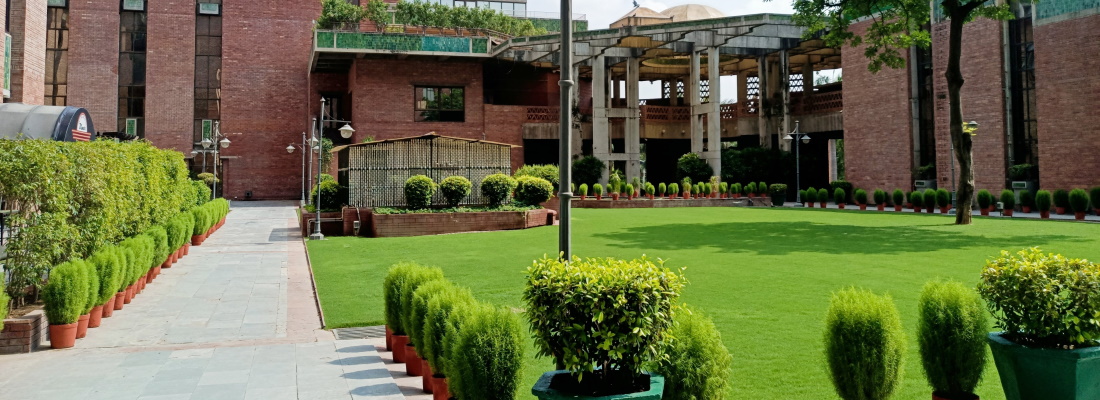
Hauz Khas Village
Hauz Khas Village was the first place in Delhi to have a nightlife scene outside the five-star hotels, and weekend crowds still pack its alleys. Most visitors these days are students and young professionals after a cheap night out. Touts work the lanes with drink deals, and the bars are loud until well after midnight.
The village is built around a medieval reservoir, and it has the 14th-century madrasa and tomb of Firoz Shah Tughlaq on its banks. Deer Park is right next door. Those who love the setting but value a good night's sleep should look at the quieter residential streets of Hauz Khas proper or neighbouring Green Park. Hauz Khas metro station is an interchange on the Yellow and Magenta lines.
Shahpur Jat
Inside the ruined walls of Siri Fort is the urban village of Shahpur Jat. Alauddin Khalji built the fort in the early 14th century. Fashion designers followed the crowds from Hauz Khas Village, and Shahpur Jat is now best known for bridal couture studios and independent labels. Young creatives fill its cafés and indie shops.
Homes here are mostly compact flats in tightly packed buildings, and some lanes are too narrow for a car. That's part of the charm for some residents, but families who need space and somewhere to park will find more of both elsewhere in South Delhi.
Lodhi Colony
The British built Lodhi Colony in the 1940s to house central government employees, and it was one of the last residential areas completed in Delhi. Since 2015, the St+art India Foundation has covered its walls with dozens of murals. The area was officially inaugurated as India's first public art district in 2019.
The India Habitat Centre is right next to the colony on Lodhi Road, and the India International Centre is just beyond Lodhi Garden. Both put on a busy programme of talks, concerts, plays, and exhibitions. Lodhi Garden itself is a few minutes' walk away, and its grounds have tombs from the Sayyid and Lodi dynasties, a rose garden, a bonsai park, and a 1.5-mile (2.5km) track for joggers. Khan Market is also close by.
Most of the flats are government quarters, so there are rarely any private rentals. Newcomers who fall for the area often look in nearby Jor Bagh or Defence Colony instead.
Family-friendly areas in Delhi
Most of the family-friendly expat areas in Delhi are close to the big international schools. Families usually pick a school before they look for a home, since nobody wants an hour in traffic twice a day. These colonies are some of the priciest in India, but they also have plenty of green space and quiet streets.
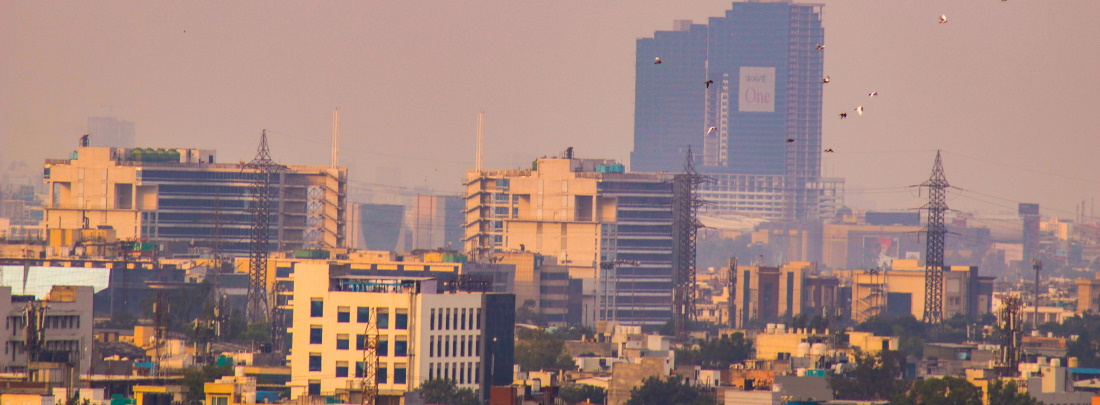
Jor Bagh
Between Lodhi Garden and Safdarjung's Tomb is the quiet, leafy colony of Jor Bagh. Most homes are bungalows or low-rise independent floors, and the area has long been popular with expat families. Children get Lodhi Garden as a giant back garden.
There's a small local market for daily errands, and Khan Market is a few minutes' drive away. Jor Bagh station on the Yellow Line is a short walk from most streets.
Vasant Vihar
Diplomats and expat families have long favoured Vasant Vihar. This green, affluent colony is in the southwest of the city, and Indira Gandhi International Airport is only about four miles (7km) away. Several smaller countries have their embassies here, and many diplomats who work in Chanakyapuri also live in the area.
The international schools in Chanakyapuri are a short drive away, and Vasant Vihar also has well-regarded Indian private schools of its own. Modern School and The Shri Ram School both have campuses here. Residents eat out and catch films at Basant Lok market, and the big malls in Vasant Kunj are just down the road. Vasant Vihar station is on the Magenta Line.
South Extension (South Ex)
Most Delhiites know South Extension (South Ex) for the two busy markets on either side of Ring Road. Behind the shopfronts, the homes are mostly builder floors. Each one is a self-contained flat across a whole storey of a low-rise building.
There are plenty of restaurants and bars along the main roads, and families will find several private schools and daycare centres nearby. South Ex has its own station on the Pink Line. Homes right on Ring Road can be noisy, so it's a good idea to look a few streets back from the traffic.
Chanakyapuri
Delhi's diplomatic enclave is Chanakyapuri, and most of the big embassies are on its wide, tree-lined avenues. The American Embassy School and The British School are both here, so families with children at either school couldn't ask for a shorter school run.
The catch is that embassies and the government own much of the housing, so private rentals are scarce and expensive. Many expat families end up in neighbouring Shanti Niketan, Anand Niketan, West End, or Vasant Vihar instead.
Education and Schools in Delhi
International Schools in Delhi
Luxury living in Delhi
Luxury living in Delhi is generally cheaper than in Mumbai, but rents in the most exclusive colonies are still sky-high. Most of the top addresses are in central and South Delhi, although Gurugram's Golf Course Road has the swankiest high-rises in the region.
Golf Links
Few addresses in Delhi are as exclusive as Golf Links, and the colony is named after the Delhi Golf Club next door. The grand bungalows here are well guarded and private, and top business leaders and diplomats are among their owners and tenants.
Khan Market is a short walk away, and well-heeled Delhiites shop and lunch at its bookshops, gourmet grocers, cafés, and restaurants. Lodhi Garden is close by too.
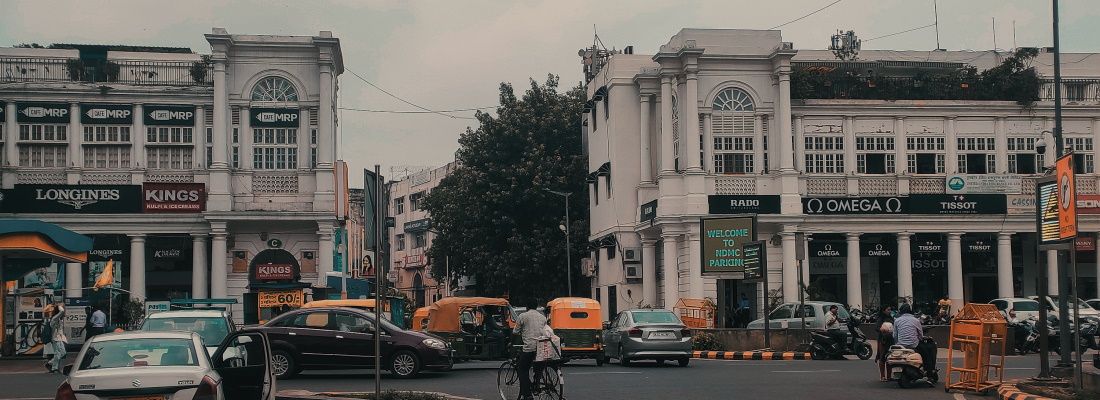
Connaught Place
Central Delhi's commercial hub is Connaught Place, which the British built between 1929 and 1933. They modelled its white Georgian-style colonnades on the Royal Crescent in Bath, and Central Park is in the middle of the inner circle.
Nearly all of Connaught Place is offices and shops, so not a lot of residents live in the circles themselves. The closest homes are flats in older blocks around the edges, while the bungalows of Lutyens' Delhi just to the south are some of the most exclusive addresses in India. There's no shortage of restaurants and bars, and Rajiv Chowk station is an interchange on the Yellow and Blue lines. The Airport Express is a short hop away at Shivaji Stadium.
Saket
Some of South Delhi's biggest malls are in Saket's district centre on Press Enclave Marg. Select Citywalk is the best known, and there are plenty of offices in the same complex. Max Super Speciality Hospital in Saket is one of the leading private hospitals in Delhi, and Saket station is on the Yellow Line. Professionals who want shops and healthcare within a short walk find the residential blocks here hard to beat.
DLF Cyber City and Golf Course Road
Gurugram's main office district is DLF Cyber City, and many of the professionals who work there live along Golf Course Road. Gurugram is across the Delhi border in Haryana, and many locals still call it Gurgaon.
Some of the most expensive apartments in India are in the gated high-rises on Golf Course Road, and most complexes have their own pools, gyms, clubhouses, and round-the-clock security. Residents can ride the Rapid Metro straight to Cyber City, and golfers have DLF Golf and Country Club on their doorstep. After work, much of Gurugram's corporate crowd unwinds at the bars and restaurants of Cyber Hub.
Corporate high-flyers with a work-hard, play-hard streak tend to feel at home here. Some expats find Gurugram's towers a little soulless next to Delhi's older neighbourhoods, and Golf Course Road is notorious for its monsoon floods.
Budget-friendly areas in Delhi
Rents are much lower away from the embassy belt, and some of the budget-friendly areas in Delhi are also among the best connected. Many expats on local contracts rent builder floors in these established middle-class colonies.
Malviya Nagar
Young professionals on a budget often rent in Malviya Nagar, which is wedged between Saket and Hauz Khas. The malls of Saket and the bars of Hauz Khas Village are both a short ride away, and Malviya Nagar has its own station on the Yellow Line.
Hauz Rani is a cramped urban village next door, and it's often treated as part of Malviya Nagar. Check the exact address of a listing before you visit.
Lajpat Nagar
Lajpat Nagar was built after Partition to house refugees from Punjab, and its Central Market is still one of the busiest retail streets in South Delhi. Rents are lower than in neighbouring Defence Colony, and Lajpat Nagar station is an interchange on the Pink and Violet lines. The streets around the market are crowded and noisy, particularly in the run-up to Diwali, so quieter parts of Lajpat Nagar III and IV are a good alternative.
Chittaranjan Park
Delhi's Bengali community has its heart in Chittaranjan Park (CR Park), which the government set up in the 1960s for families displaced from East Pakistan after Partition. Its fish markets and sweet shops are famous across the city, and residents put up some of the most elaborate pandals in Delhi for Durga Puja each autumn. It's a quiet, leafy neighbourhood, and it's generally cheaper than neighbouring Greater Kailash. Nehru Enclave and Greater Kailash stations on the Magenta Line are close by.