

- Download our Delhi Schools Guide
Expats tend to love or loathe the lifestyle in Delhi, and there are plenty of reasons for both. The city's summers are blisteringly hot until the monsoon in late June, and the winter smog is among the worst of any capital in the world. More than 30 million residents live in Delhi’s wider urban area, and it’s one of the largest cities on the planet. Newcomers often find the sheer scale of the city a lot to take in.
Delhiites celebrate Diwali, Holi, Eid, and Durga Puja with gusto, and the city’s skyline is dotted with Mughal forts and mosques that are far older than the colonial capital of New Delhi. Joggers and picnickers share the lawns of Lodi Gardens with tombs that are more than 500 years old, and many families spend their weekends in the glossy malls in Saket and Vasant Kunj.
Shopping in Delhi
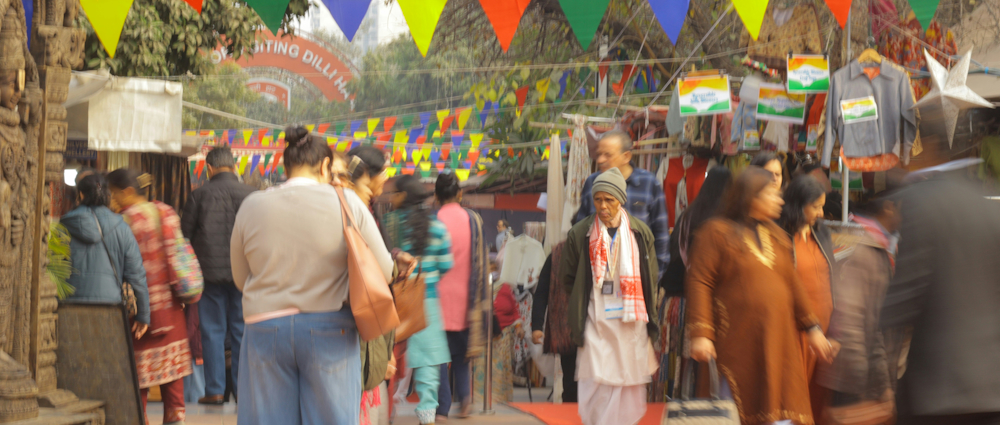
A good haggle is part of the shopping experience in Delhi, and bargain hunters will soon get the hang of it. Shopkeepers at Lajpat Nagar Central Market, with their stalls piled high with shoes, clothes, fabric, and kitchenware, will expect you to bargain, and they set their initial asking prices accordingly. Janpath Market is next to Connaught Place and is the spot for souvenirs, Tibetan jewellery, cheap shirts, and second-hand books. Sarojini Nagar is famous for export-surplus clothing, and Dilli Haat has stalls where artisans from across India can sell their crafts.
Khan Market has the highest retail rents in India and regularly appears in global rankings of the world’s priciest high streets. There are gourmet delis, bookshops, homeware boutiques, and fashion labels at street level, and many of the bars and cafés are upstairs. It’s an easy place to while away a Saturday afternoon.
Delhi’s malls are where many residents head to escape the summer heat. DLF Emporio in Vasant Kunj is the city’s main luxury address. Select Citywalk and DLF Avenue are side by side in Saket. Both are big all-rounders, as are Ambience Mall in Vasant Kunj and DLF Mall of India in Noida. They have cinemas, food courts, restaurants, and play areas for children, so families often make a day of it.
Entertainment and eating out in Delhi

Connaught Place is the classic starting point for entertainment and eating out in Delhi. It’s right at the centre of the city, and its colonnaded circles are packed with pubs, cocktail bars, cafés, and restaurants. Hauz Khas Village is the hub of South Delhi’s bar scene. Bands play at several of its venues on weekends, and the rooftop terraces have views over a medieval reservoir and the ruins of a 14th-century madrasa.
Smart restaurants in Mehrauli have views of the floodlit Qutub Minar, and Khan Market has bars and roof terraces for a quieter drink. Greater Kailash has a lively club scene, and most of it is around M Block Market. Aerocity is a cluster of upmarket hotels next to the airport, and its bars and restaurants are a favourite for business dinners. Paharganj is still a backpackers’ haven, and its bars are as cheap and cheerful as any in Delhi.
The legal drinking age in Delhi is 25, so younger expats should carry ID. It’s 21 across the border in Gurugram and Noida. The metro shuts down around midnight, so most residents book a cab home after a late night.
Mandi House is Delhi’s theatre district, and there are talks, concerts, films, and exhibitions at the India Habitat Centre on Lodhi Road almost every week.
The food is one of the best things about life in Delhi. Old Delhi is famous for Mughlai kebabs, stuffed parathas, jalebis, and chaat, and the lanes around Chandni Chowk are the place to try them. Delhi’s five-star hotels are home to some of India’s most celebrated restaurants. There are also restaurants for every regional cuisine in the country, from Keralan seafood to Kashmiri wazwan.
Street food is part of daily life in Delhi. The safest stalls are the busy ones where cooks fry or grill everything to order. Newcomers should go easy on raw salads and chutneys until they’ve settled in.
Outdoor activities and sports in Delhi
Residents who enjoy outdoor activities and sports in Delhi soon learn to plan around the weather. Summer temperatures are often above 104°F (40°C) from April to June, and the smog is at its worst from November to January. Late winter and early spring are the most pleasant times to be outdoors, although regular runners still check the air quality index before they head out.
Lodi Gardens and the Deer Park in Hauz Khas are favourites with joggers. Hikers head for the forest trails of the Aravalli hills at Sanjay Van, the Aravalli Biodiversity Park, Asola Bhatti Wildlife Sanctuary, and Mangar Bani over the border in Haryana. Cyclists ride out early on weekend mornings, when the roads are quieter.
Adventure parks on the edge of the city and along Sohna Road in Gurugram have zip lines, climbing walls, rope courses, and bungee jumps. Operators near Sohna also run power paragliding and microlight flights over the farmland south of Gurugram. Gurugram has go-kart tracks and paintball arenas too. Damdama Lake is nearby and has boats for hire and campsites on its banks. Rishikesh is about 150 miles (240km) away by road and is the go-to weekend escape for white-water rafting on the Ganges.
Cricket is still king in Delhi. The Delhi Capitals play their Indian Premier League home games at the Arun Jaitley Stadium, and fans should book early for the big fixtures. The Jawaharlal Nehru Stadium is the city’s main venue for football and athletics, and hockey fans should head to the Major Dhyan Chand National Stadium.
Delhi’s private members’ clubs are famously hard to join, and many have waiting lists of several years. Most new arrivals have better luck at the public sports complexes that the Delhi Development Authority (DDA) runs across the city. Siri Fort Sports Complex is the best known and has tennis and squash courts, a swimming pool, a golf driving range, and a gym. Permanent membership is often closed, but foreign nationals can usually sign up for temporary or casual memberships instead. The DDA also runs public golf courses such as the Qutab Golf Course.
See and do in Delhi
There’s enough to see and do in Delhi to fill years of weekends, since the modern city is built over the remains of at least seven earlier ones. Ruins from almost every era are scattered through its parks and backstreets. Most residents stick to one major sight per outing because the traffic and summer heat can be exhausting.

Red Fort
Delhiites call the Red Fort Lāl Qila. Emperor Shah Jahan built it between 1639 and 1648, and it was the seat of Mughal power until the British took control of Delhi in 1857. Its red sandstone walls are about 1.5 miles (2.4km) long. The prime minister gives a speech from the ramparts every Independence Day. The fort is one of Delhi’s three UNESCO World Heritage Sites, and there are museums within its walls dedicated to the 1857 uprising and the Indian National Army.
Humayun’s Tomb
Humayun’s Tomb is another of Delhi’s UNESCO sites and was the first garden tomb in the Indian subcontinent. The emperor’s widow commissioned it after he died in 1556. Its design was an inspiration for the Taj Mahal. Sunder Nursery is right next door. The Aga Khan Trust for Culture restored this heritage park, and its Mughal-era monuments and the lawns are a favourite picnic spot for local families.
Qutub Minar
The tallest landmark in Mehrauli is the Qutub Minar. It’s a 238-foot (72.5m) sandstone minaret and part of Delhi’s third UNESCO World Heritage Site. Qutb-ud-din Aibak began work on it in the 1190s, and later sultans completed the upper storeys. There’s also an iron pillar in the complex that is more than 1,600 years old, and it has barely a speck of rust.
India Gate
India Gate is a memorial to more than 70,000 soldiers of the British Indian Army who died between 1914 and 1921 in the First World War and the Third Anglo-Afghan War. Sir Edwin Lutyens designed the arch, and it was unveiled in 1931. The Kartavya Path boulevard was redeveloped in 2022, and its lawns are now a favourite spot for an evening stroll. The National War Memorial next door is dedicated to the Indian soldiers who have died since independence.
Jama Masjid
Shah Jahan built the Jama Masjid between 1650 and 1656, and it’s one of the largest mosques in India. Its official name is Masjid-i-Jahan-Numa. There’s room for 25,000 worshippers in the courtyard, and you can climb the southern minaret for views over Old Delhi. Visitors should dress modestly and avoid prayer times, when the mosque is closed to tourists.
National Gallery of Modern Art
Art lovers will find the National Gallery of Modern Art a delight. The gallery is in Jaipur House near India Gate, and the building was once the Delhi residence of the Maharaja of Jaipur. Its collection has more than 17,000 works from the mid-19th century onwards. The paintings by Amrita Sher-Gil are a highlight, and there are also major works by Raja Ravi Varma, Rabindranath Tagore, Jamini Roy, and Nandalal Bose.
National Gandhi Museum
The National Gandhi Museum is opposite Raj Ghat, where Mahatma Gandhi was cremated in 1948. Its collection has original relics, books, journals, and artworks connected to his life. On display are his walking stick, an urn for his ashes, the blood-stained dhoti he wore on the day he died, and one of the three bullets his assassin fired. It’s a moving visit for anyone interested in India’s independence movement.
Meeting people and making friends in Delhi
New arrivals who want to start meeting people and making friends in Delhi usually begin with the city’s established expat groups. Delhi Network hosts weekly coffee mornings, and Gurgaon Connection does the same for expats living or working in Gurugram. French speakers have their own association, Delhi Accueil.
Expats who want to give something back can volunteer with the Delhi Commonwealth Women’s Association. It has run charity projects in the city since 1952, and its annual charity bazaar is a fixture on the diplomatic calendar. Meetup has groups for hikers, photographers, board-game fans, and start-up founders, and expat Facebook and WhatsApp groups are handy for advice and invitations.
Business-minded expats should look up their country’s bilateral chamber of commerce, since many have offices in Delhi and hold regular business events. A temporary membership at a DDA sports complex is another easy way to meet Delhiites on the tennis or squash court.