

- Download our Delhi Schools Guide
Expats who want good accommodation in Delhi at a fair price have their work cut out for them. Demand for homes has outpaced supply for years, and rents across the capital are far higher than they were a few years ago.
Gurugram, Noida, Greater Noida, and Ghaziabad are all satellite cities in the wider National Capital Region (NCR), and many newcomers search across the whole region. Gurugram is the NCR’s most expensive rental market because so many multinationals and tech firms have offices there. Golf Course Road and the Dwarka Expressway are two of its most sought-after addresses. Noida and Greater Noida are among the most affordable big-city rental markets in India, so you could save a fair amount on rent if you choose your location wisely.
Some employers lend a hand with the house hunt. If you’re going it alone, a reliable real estate agent can make the process much smoother.
Areas and suburbs in Delhi
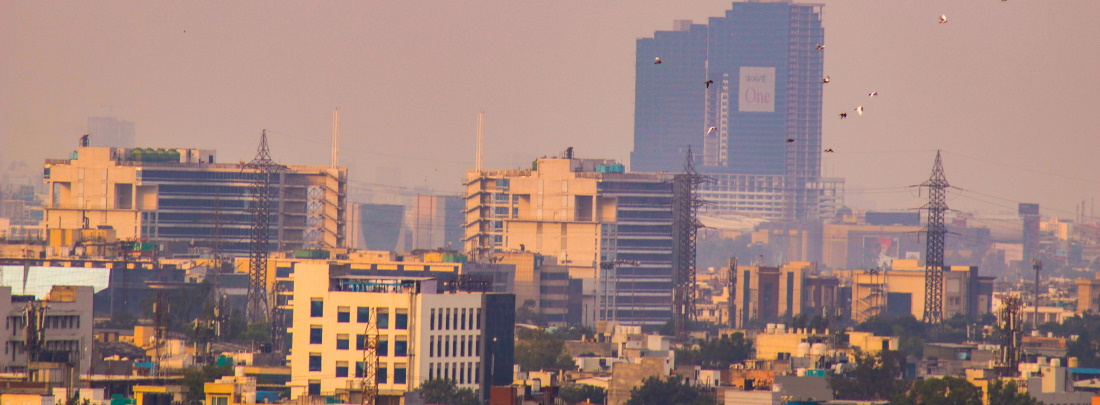
Newcomers usually narrow down the areas and suburbs in Delhi by commute and budget first, and then by the kind of neighbourhood they’d like to come home to. Hauz Khas Village has a buzzy bar scene and a young crowd, while leafy Jor Bagh is quiet and popular with families.
Plenty of expats skip Delhi proper and settle in Gurugram or Noida instead. Both cities are on the Delhi Metro network. Gurugram has more international restaurants and nightlife, while Noida is generally quieter.
If you want to find out more, check out our comprehensive guide to the Best (and Worst) Areas and Suburbs in Delhi.
Types of accommodation in Delhi
Most expats rent either a builder floor or an apartment in a gated society, and these are the main types of accommodation in Delhi. High-rise towers are less common in Delhi itself, and most of the region’s tallest residential blocks are in Gurugram and Noida. Lutyens’ Delhi is famous for its colonial-era bungalows, but most are government residences, and embassies and big companies are the usual tenants for the few private ones on the market.
Apartments in gated societies are the standard choice in Gurugram and Noida. A society is a cluster of high-rise towers, and residents share a gym, pool, clubhouse, and round-the-clock security. Most societies also have power backup for outages. Flats in these complexes are pricier than builder floors. Some residents find life in a big tower a little isolating, although most complexes have busy residents’ groups and community events.
Independent floors are among the most popular types of property in Delhi, and most locals call them builder floors. They’re in low-rise buildings of three or four storeys, and you rent a whole floor rather than a unit in a block. Builder floors have more space and privacy than high-rise apartments, but gyms and pools are rare unless the building is part of a gated complex.
Landlords often live on another floor of the same building. That’s handy when something breaks, although some tenants find it a little close for comfort. Top-floor flats are fiercely hot in summer, and so are the rooftop units known as barsatis. Ask about air conditioners and roof insulation before you sign for one.
If you’d like more space and seclusion, a villa or independent house might be your best bet. Houses are harder to find and usually pricier than flats, but most have more privacy, and many have a garden. They’re ideal for families and anyone who wants a quieter home. Upmarket colonies such as Vasant Vihar and Shanti Niketan are the usual places to look in Delhi, and Gurugram’s older DLF phases have plenty of independent houses.
Landlords and agents in India describe homes by BHK, which is short for bedroom, hall, and kitchen. A single professional might settle on a one BHK, while families usually look at two or three BHK flats and up. The smallest studios are one RK flats, and RK is short for room and kitchen.
Furnished vs unfurnished
Landlords in Delhi let homes furnished or unfurnished, and many also advertise flats as semi-furnished. A semi-furnished flat usually has wardrobes, fans, lights, and a fitted kitchen, and some landlords add air conditioners and water heaters (known locally as geysers). Some unfurnished flats don’t even have light fittings, so check exactly what’s included before you sign.
Fully furnished homes are highly sought after among expats and young professionals who’d rather not buy furniture, and landlords charge more for them. Tenants who plan to stay several years often prefer unfurnished homes because the rent is lower and they can make the place their own. Plenty of NCR residents rent furniture and appliances by the month as a middle ground.
Short lets
You’ll find plenty of short lets in Delhi, especially around Connaught Place and in South Delhi neighbourhoods such as Greater Kailash and Saket. Business travellers also favour serviced apartments in Gurugram and in Aerocity, which is next to the airport.
Airbnb and Booking.com both have a wide choice of listings in the city. A short let is pricier than a long-term rental, but it’s a sensible base for your first few weeks while you house hunt. Fire safety standards are patchy in some guesthouses and converted homes, so check for a clear exit route and smoke alarms before you book.
Useful links
Finding accommodation in Delhi

If you’re moving for work, your employer may well help with finding accommodation in Delhi, and some companies line up a home before you land. You’ll have less choice that way, but you’ll save a lot of hassle. Employer-arranged homes are usually comfortable and close to the office.
Some expats are lucky enough to have a relocation company on the case. Its consultants ask what you want and shortlist properties for you to view.
If you’re on your own, start online before you arrive. MagicBricks and 99acres have thousands of NCR listings, and on both you can filter for owner-listed homes to deal directly with landlords and avoid a broker’s fee. Expat groups on Facebook are another good source, and so are the residents’ groups in gated societies, since owners often advertise there first.
Once you’re in Delhi, a reputable real estate agent is the quickest way to see lots of homes in a short time. Locals usually call agents brokers or property dealers. Good brokers know the local market inside out and can steer you away from problem buildings. The usual fee is one month’s rent, and it’s negotiable. Brokers often charge both the tenant and the landlord, so agree on your share in writing before you start viewings.
Useful links
Renting accommodation in Delhi
If you’re renting accommodation in Delhi, expect landlords to charge a hefty premium for newer buildings. Rent for a flat in a new development can be up to double the rent in an older block nearby.
Delhi’s old rent control law applies only to the cheapest tenancies, so landlords set most rents based on demand and the condition of the property. A knowledgeable agent can tell you whether the asking rent is in line with similar homes in the area, and most landlords expect tenants to haggle a little.
Making an application
You won’t need much when you’re making an application in Delhi. Landlords and agents usually ask for these documents.
- Passport and visa copies
- Proof of your permanent address, which can be from your home country
- An employment letter or recent salary slips as proof of income
- Two passport-sized photographs for the rent agreement and police verification
Before you hand over any money, ask to see the landlord’s sale deed or a recent property tax receipt as proof of ownership.
Delhi Police requires landlords to register every tenant for police verification, and foreign tenants have an extra step. Within 24 hours of your arrival at the property, your landlord must report your stay to the Foreigners Regional Registration Office (FRRO) through an online Form C. You may need a copy of this form when you register with the FRRO yourself, so check that your landlord has filed it.
Leases
Landlords in Delhi usually offer 11-month leases. Any agreement of a year or more has to be registered at the Sub-Registrar’s office, and many landlords would rather avoid the extra stamp duty and fees. An 11-month agreement should still be printed on e-stamp paper and notarised; both parties can renew it each year. Most landlords add a rent increase of 5 to 10 percent at each renewal.
Lock-in periods are common too. During a lock-in, neither party can terminate the lease without incurring a penalty. If your employer could transfer you at short notice, negotiate a short lock-in or none at all.
Deposits and fees
Bengaluru landlords can ask for up to 10 months’ rent as a deposit, but deposits and fees in Delhi are far more modest. Most landlords here ask for between one and three months’ rent.
Under the central government’s Model Tenancy Act, deposits on homes are capped at two months’ rent, but the cap is only in force where a state or territory has adopted the act. Delhi hadn’t adopted it at the time of writing, so ask your agent whether the rules have changed before you sign. Gurugram is in Haryana, and Noida is in Uttar Pradesh, so tenancy rules in those cities aren’t the same as Delhi’s.
Tenants usually pay the first month’s rent upfront, and the two sides often split the stamp paper and notary costs. When you move out, the landlord returns the deposit minus any unpaid bills or the cost of repairs. Photograph every room on the day you move in so there’s a record if you disagree later.
Terminating the lease
Landlords and tenants agree on the notice period for terminating the lease when they sign, and one month is the most common term in Delhi. Some landlords ask for two or three months’ notice, so read this clause carefully. Tenants who leave without proper notice or during a lock-in usually lose part or all of the deposit.
A landlord who ends the lease early without notice may owe you compensation if the agreement has a clause to that effect. Some owners end a lease early because they’ve sold the property or need it for family, so ask your landlord to add a clause about these situations.
Renting Accommodation in India
Useful links
Utilities in Delhi

Tenants usually pay for utilities in Delhi on top of the rent. In many rentals, the electricity and water accounts are in the landlord’s name, so you either pay the bills directly or settle up with the landlord each month. Most gated societies also charge a monthly maintenance fee, and some landlords include it in the rent.
Electricity
Private companies have supplied most of the electricity in Delhi since the Delhi Vidyut Board was broken up in 2002, and the supply is far more reliable as a result. BSES Rajdhani Power supplies south and west Delhi, and its sister company BSES Yamuna Power handles east and central Delhi. Tata Power-DDL supplies the north and northwest, and the New Delhi Municipal Council (NDMC) looks after its own central district.
Power cuts are rare in most of Delhi, even in summer, when demand is at its peak. Gurugram is a different story. Several-hour outages are common there during the hot months, so most gated societies have diesel or battery backup. Ask whether the backup is enough for the air conditioners or only for lights and fans, and find out how the society bills for it.
Household tariffs in Delhi are low by Indian standards, but there’s also a variable surcharge on every bill called the Power Purchase Adjustment Cost (PPAC). Bills are issued monthly, and you can pay via your supplier’s app or set up autopay with your bank.
Tenants in builder floors should check whether the flat has its own meter from the supplier or a sub-meter on the landlord’s connection. On a sub-meter, the landlord sets the per-unit rate, and many charge well above the official tariff, so get the rate in writing.
Mains electricity in India is 230V and 50Hz. Most laptop and phone chargers are dual-voltage, but you’ll need a voltage converter and a plug adapter for many US kitchen appliances.
Gas
Most households in Delhi cook with gas, and many now have piped natural gas (PNG) from Indraprastha Gas Limited (IGL), which supplies Delhi, Gurugram, Noida, and Ghaziabad. Piped gas is generally reliable, and outside of planned maintenance, interruptions are rare. Households without a pipeline buy LPG cylinders from Indane, Bharat Gas, HP Gas, or one of the smaller private suppliers.
You’ll get an IGL bill every second month, which you can pay online or through India’s UPI payment apps. LPG users can book refills through the supplier’s app or by phone, and the local distributor delivers them to the door. If the flat isn’t connected to the pipeline yet, IGL will need the rental agreement and an NOC from your landlord before it can install a connection.
Water
Water in Delhi is supplied by the Delhi Jal Board (DJB), and the NDMC and Delhi Cantonment Board run supply in their own areas. In many neighbourhoods, the mains supply is only on for a few hours a day. Most buildings have a motor and an overhead tank, so residents have water around the clock even when the mains are off. Some households order water tankers during summer shortages. When you view a builder floor, check the water pressure and ask whether your flat has its own motor and tank.
Expats shouldn’t drink water straight from the tap. Most furnished and semi-furnished flats have a reverse osmosis (RO) purifier in the kitchen, and many residents also buy large refillable bottles of drinking water.
DJB issues bills on a regular cycle, and you can pay online through its website or app. During severe shortages, DJB can restrict water use and fine residents for waste.
Bins and recycling
Three civic bodies handle bins and recycling in Delhi. The Municipal Corporation of Delhi (MCD) covers most of the city, while the NDMC and the Delhi Cantonment Board look after their own districts. Residents and businesses in Delhi produce more than 11,000 tonnes of waste a day.
Private contractors hired by the MCD collect household waste door to door in most areas. Many gated societies and residents’ welfare associations (RWAs) also hire their own collectors for a small monthly fee, and landlords often fold this into the maintenance charge.
Households legally must separate their waste into wet, dry, sanitary, and special-care streams. Batteries and expired medicines are special-care waste. Compliance is patchy, and a lot of households still put everything in one bin. Larger gated societies are classified as bulk waste generators, and many of them compost their wet waste on-site.
Dry waste such as paper, plastic, glass, and metal has resale value in Delhi, and the neighbourhood kabadiwala (scrap dealer) will buy it from your door.
Internet
You can get fibre internet almost anywhere in Delhi and the NCR. Airtel, Jio, ACT Fibernet, and BSNL are the big names, and Excitel is a popular budget option. Gated societies often have only a few providers wired into the building, so ask which ones before you move in. Most providers can install a connection within a few days and accept the rent agreement as proof of address.