
A small landlocked country bordered by France, Germany and Belgium, Luxembourg is well-known for its exquisite natural landscape and beautiful ancient architecture. A little more than half of Luxembourg's permanent residents are foreigners, and the country continues to attract expats from all over the world thanks to its thriving economy and high quality of life.
Below is some useful information about diversity and inclusion in Luxembourg.
Accessibility in Luxembourg
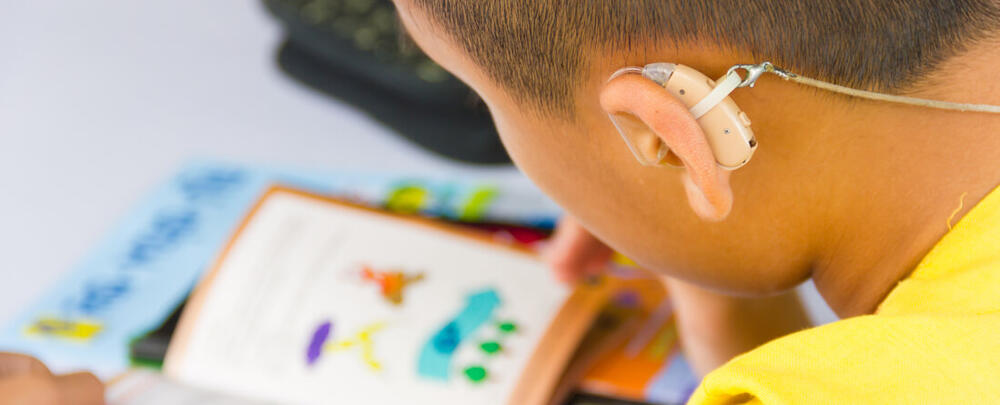
As a recipient of the 2022 EU Access City Award, Luxembourg prioritises accessibility by following a 'Design for All' approach. The country's capital, Luxembourg City, has low-floor buses equipped with ramps, while bus stops are announced visually and through audio. City buses have dedicated wheelchair space onboard, while the trams also boast low floors.
The city takes its accessibility a step further by continuously consulting people living with disabilities to measure the impact of its accessibility advancements. People living with disabilities in Luxembourg are also not excluded from key civic decisions, as council meetings are made available in sign and spoken language, as well as transcription.
Luxembourg City also has excellent wheelchair accessibility, with curb ramps at almost all intersections. Service animals are allowed on public transport at no cost, and there are taxi services for those with reduced mobility.
Useful resources
LGBTQ+ in Luxembourg
Although Luxembourg is a largely conservative Catholic country, LGBTQ+ individuals enjoy many freedoms. The country's former Prime Minister, Xavier Bettel, became the first serving leader in the European Union to marry their same-sex partner in 2015 following the landmark ruling legislating same-sex marriage in 2014.
Following the decision to legalise same-sex marriage, Luxembourg's constitution was amended to allow members of the LGBTQ+ community to adopt children in 2015. Members of the LGBTQ+ community can openly serve in the military without discrimination. The Grand Duchy of Luxembourg also adopted a self-determination law that allows the right to legal gender change without surgery.
While Luxembourg offers extensive protections for the LGBTQ+ community, the country still has work to do. The 2024 Rainbow Europe index ranked Luxembourg seventh out of 49 European countries. This is down two spots from its 2023 ranking, which can be attributed mainly to the fact that conversion therapy is not banned in Luxembourg.
Men who have sex with men (MSMs) are banned from donating blood unless they are abstinent for one year, and there is no legal recognition for non-binary gender in Luxembourg. Still, LGBTQ+ individuals moving to the country's major cities will largely be accepted and welcomed. Those moving to the more rural or conservative areas are discouraged from engaging in public displays of affection, as this can sometimes be met with contempt.
Useful resources
Gender equality in Luxembourg
Gender equality is enshrined in Luxembourg's constitution, guaranteeing the same rights and freedoms for women and men. Luxembourg is the only country in the EU that has established a formal ministry to drive gender equality exclusively. The Ministry of Equality between Women and Men was initially founded in 1995 under the name Ministry for Women's Promotion. Despite the name change, the mandate to inculcate gender mainstreaming in Luxembourg's political structures remains the same.
The country scored an impressive 74.7 out of a possible 100 points in the 2023 European Institute for Gender Equality (EIGE) Index, placing it in the top 10 out of 27 EU member states. The country's score rose by 1.2 points, particularly in the areas of economic power, money and health. Luxembourg has also held the top spot in the subdomain for financial resources since 2010.
Luxembourg currently boasts the smallest gender wage gap in Europe, at 0.7 percent. The country's government statistics service, Statec, estimates that its 2022 gender pay gap stood at -0.7 percent, making it the only EU country to achieve equal pay.
While Luxembourg is far ahead of the pack in terms of gender equality, the country's society still holds traditional views when it comes to gender roles. According to the EIGE, during the pandemic, 51 percent of women reported taking care of small children, compared to only 29 percent of men. Additionally, 63 percent of women said they carried out housework alone or largely alone. This has resulted in more women than men taking on part-time work, negatively affecting women's annual wages.
Luxembourg offers generous maternity leave of 20 weeks, which is split into eight weeks before the expected due date and 12 weeks after that. Parents can also apply for parental leave for the same child for up to six months on a full-time basis, making Luxembourg one of the best countries in the world to welcome a child. The country also gives birth allowances to new parents with children up to the age of two.
Despite its society still holding some archaic gender views, the Grand Duchy of Luxembourg remains a leader in gender equality in the EU.
Useful resources
Women in leadership in Luxembourg
Luxembourg is known as one of the most progressive countries in the world, and has worked hard to improve the representation of women in leadership positions over the years. The European Women on Boards 2023 Gender Diversity Index places Luxembourg at fifth out of 19 European countries surveyed.
This is a marked improvement in the country's performance from its 2021 ranking of 18th out of 19 countries. Since late 2023, women have held over 40 percent of board seats in Luxembourg.
In 2016, Luxembourg amended the electoral act to include gender quotas for national and European elections. The law states that political parties must ensure that 40 percent of their candidates in national elections are women, while the quota for European elections is 50 percent.
Political parties that fail to achieve these quotas are subject to reduced state funding. This has led to significant progress, as women now hold 33 percent of parliament seats, compared to 18 percent in the 2018 general elections.
The EU adopted new legislation in November 2022 requiring all listed companies with more than 250 employees to have 40 percent of non-executive directors on their boards be women by 2026. While this doesn't affect many of Luxembourg's companies, this is still a step towards reducing gender disparities in the country.
Useful resources
- The Network – Professional Women's Network
- Women in Business
Mental health awareness in Luxembourg
Foreigners moving to Luxembourg will have access to high-quality mental healthcare. This is particularly important for newly arrived expats, as they are more susceptible to mental health issues such as anxiety and depression.
As one of the wealthiest countries in the world, Luxembourg offers its residents an undeniably exceptional quality of life. Still, the Grand Duchy claims one of the highest incidences of chronic depression in the EU, according to a report by Eurostat. In response to this decline in mental wellness in the country, Luxembourg has shifted its mental healthcare model from institutional care to community-based methods.
All legal residents in Luxembourg can receive state-sponsored health insurance covering primary mental healthcare. This typically involves GP support and inpatient and outpatient care at psychiatric hospitals. Inpatient care is usually approved for short-stays rather than long-term.
Those with more serious diagnosed mental health conditions will have access to secondary mental healthcare through state-funded providers, community health organisations and volunteer networks. Although Luxembourg's health insurance is comprehensive, it has some exclusions, so most locals and expats choose to supplement it with private health insurance.
This allows them to access private services and avoid waiting lists, which are common in the public system. That said, Luxembourg boasts a high ratio of psychiatric professionals in relation to its population.
Useful resources
Unconscious bias training in Luxembourg
The concept of unconscious bias is an implicit set of social stereotypes an individual carries about groups of people different to themselves. These stereotypes are not purposefully adopted but rather develop subtly over time, and people tend to hold these unconscious biases about groups they never or rarely come into contact with. As a result, they're frequently inaccurate and based on assumptions.
Unconscious bias can significantly affect workplace dynamics and impact the opportunities available to certain groups of people, which could affect a company's talent acquisition and turnover rates.
A report by Luxembourg's Centre for Equal Treatment found that both conscious and unconscious bias still exists in the country. The study found that discrimination related to race or ethnicity is increasing while unconscious stereotypes and prejudices remain ingrained in Luxembourg's society. This leads to individuals from certain races experiencing what they perceive as microaggressions, and this is most common in workplaces, social media, housing and public spaces.
Some companies, especially multinational corporations, have started offering unconscious bias training to assist their employees with recognising and ultimately overcoming their biases. There are also online resources that can be used to improve one's recognition of unconscious bias in themselves and others.
Useful resources
Diversification in the workplace in Luxembourg

As the country in the world with the highest GDP per capita, Luxembourg has attracted many expats. Almost 50 percent of the country's population is foreign-born, creating a society that is a melting pot of cultures.
Luxembourg's workplace is highly diversified, as many local and multinational companies employ people of more than 170 different nationalities. In fact, approximately 46 percent of Luxembourg's workforce comprises migrant workers who cross the border daily from Germany, Belgium, or France.
You will be delighted to find that the Luxembourgish people are generally welcoming of foreigners, especially those who try to speak at least one of their three official languages (Luxembourgish, German, and French). Be that as it may, expats of African descent may experience some discrimination.
A 2018 study by the European Union Agency for Fundamental Rights found that 50 percent of expats of African descent felt discriminated against in the 12 months before the survey was conducted. With these glaring statistics in mind, Luxembourg's government continues to run campaigns to raise awareness about discrimination and its effects.
A study by the same agency conducted in 2022 found that the government has taken actions to reduce racial discrimination in the Grand Duchy. The Luxembourgish government signed a law in 2021 explicitly prohibiting the incitement of violence, hatred and terrorism in the audiovisual media. The parliament also approved strengthening efforts to raise awareness and institute prevention and intervention measures to fight against discrimination on social media.
Safety in Luxembourg
With one of the lowest crime rates in the world, Luxembourg is a largely safe country to live in. Although violent crime such as murder rarely happens in the country, violent robberies are rising.
Petty crimes, such as pickpocketing, can occur, particularly on public transport. Burglaries can also happen, especially during the August holiday period and around Christmastime, when most people travel and leave their homes vacant.
New arrivals to Luxembourg should be aware of scams, with phishing, tax and banking fraud being the most common. Expats should remain vigilant and keep their valuables out of sight to avoid falling victim to pickpockets.
Calendar initiatives in Luxembourg
4 February – World Cancer Day
8 March – International Women's Day
24 March – World TB Day
2 April – World Autism Awareness Day
23 May – Diversity Day
July – Pride Month Celebrations
10 September – World Suicide Prevention Day
October – Breast Cancer Awareness Month
8 October –World Mental Health Day
14 November – World Diabetes Day
1 December – World AIDS Day