

Thanks to Luxembourg's dense public transport network, getting around the country is simple and straightforward. Luxembourg values mobility, so the whole country is accessible via several networks, including railways, buses, and cars on the country’s excellent highways and secondary roads.
In 2020, Luxembourg became the first country in the world to offer free public transport throughout the country. If you wish to travel first class or across the border into certain parts of neighbouring France, Germany, or Belgium, you will still need to purchase a ticket. Otherwise, travelling on trains, buses, and the tram is free for everyone, including residents and tourists.
Public transport in Luxembourg
All forms of public transport are efficient, clean, and fast ways to get around Luxembourg. Buses, trains, and trams are interconnected, making transfers from one form of transport to another easy. There are also international lines integrated with the transport systems of France, Germany, and Belgium.
Information regarding all the country’s routes, connections, and networks can be found on the Mobilitéits Zentral website.
Trains
Société nationale des chemins de fer luxembourgeois (CFL) runs the trains in Luxembourg. The CFL currently offers commuters seven lines that travel across the country, with more lines in development. All passengers can travel on these lines within Luxembourg and to particular stations across the country’s borders without a ticket.
Announcements on all CFL trains are in French only, but the CFL website and apps are in English, French, and German. Although space can be limited during rush hours, passengers are free to bring bicycles, pets, and luggage on all CFL trains.
Trains travel throughout the day, but night services are extremely limited. CFL travels nationally and to neighbouring countries, but several other international train services, such as NMBS and TGV, also operate in Luxembourg.
Buses
AVL, RFTR, and TICE provide bus services in Luxembourg. AVL and TICE provide bus services within Luxembourg only, while RGTR also travels across the country’s borders.
RGTR runs the largest network, which consists of more than 340 lines. AVL operates in Luxembourg City and its surrounding municipalities, while TICE only serves a small part of southwestern Luxembourg.
Buses travel daily between 5 a.m. and midnight. Night riders will be delighted to find that there are also limited night bus services.
Tram
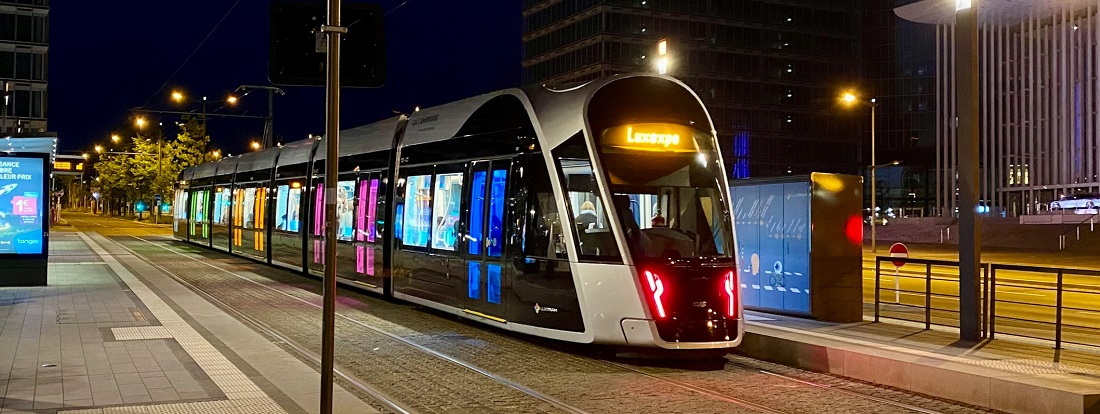
Although trams were a big part of Luxembourg’s transport system in the past, they eventually stopped running and only came back into operation in 2017. Luxtram runs the country’s tram network, which currently consists of only one tram line (Line T1) with 17 stops. Fortunately, Luxembourg's government has plans to increase the tram lines to four by 2035.
The tram operates in Luxembourg city only and runs from Luxexpo to Gare Centrale from around 4:30am to 12:30am daily, with slightly shorter hours on Sundays.
Useful links
Taxis in Luxembourg
Taxis are widely available in all urban areas in Luxembourg. They can be hailed off the street, at a taxi rank, by phone or through a taxi company’s mobile app. All taxi companies are free to determine their own prices; the government does not control this. For this reason, taking a taxi can be steep in Luxembourg.
The ride-hailing app Uber has partnered with local company Webtaxi to enable its operation in Luxembourg. The company officially started operating in 2024 and has made booking a taxi in the country easier to book a taxi. Traditional taxi companies also have apps that allow people to order and prebook rides.
Useful links
Driving in Luxembourg
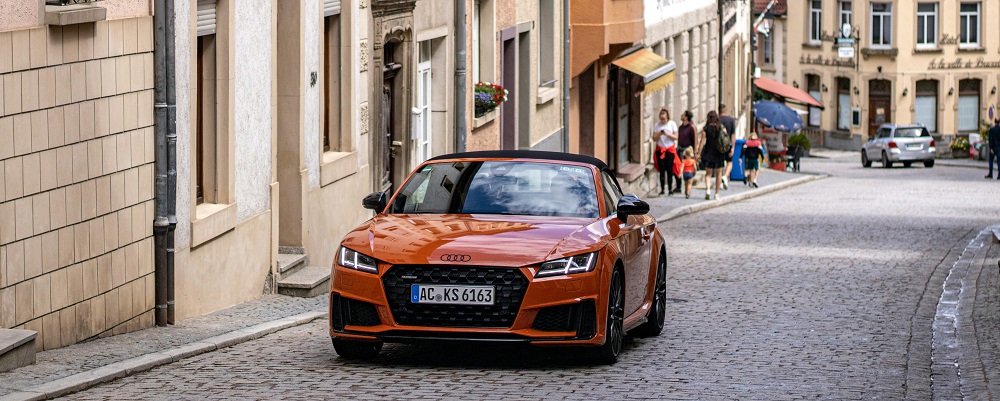
Driving in Luxembourg is easy on the country’s excellent network of highways and secondary roads, which span the entire country and connect Luxembourg to its neighbours. Despite the country’s exceptional public transport system, most residents have a car. While compulsory vehicle tax and insurance can be pricey, fuel in Luxembourg is cheaper than in its neighbouring countries.
EU and EEA driving licences are recognised in Luxembourg. That said, if you're from these countries, you should register your licences after arriving. Once you register your licence, you can be issued a Luxembourg licence if your EU/EEA country licence expires or is lost or stolen without having to retake a driver’s test.
If you're from non-EU/EEA countries, you can drive using your foreign licence for one year before you must exchange it for a Luxembourg licence. To exchange your foreign driving licence, you must obtain a medical certificate from your doctor in Luxembourg and a copy of your criminal record from your home country. If you fail to exchange your driving licence within a year, you will have to take a written and practical driving test.
Air travel in Luxembourg
Luxembourg only has one airport, the Findel Airport, which is situated just outside of Luxembourg City. While there is currently no train line between the city and the airport, there are bus and taxi services that travel to and from the airport.
The number of flights in and out of Findel is increasing each year as Luxembourg is becoming a more popular travel hub in the EU. While the vast majority of destinations with direct flights from Luxembourg are in Europe, there are a few North African and West Asian counties that you will also be able to reach directly from Findel airport.
Findel is a modern airport with three terminals, all of which are run efficiently. The national airline carrier Luxair travels to various destinations, along with several international and budget airlines.